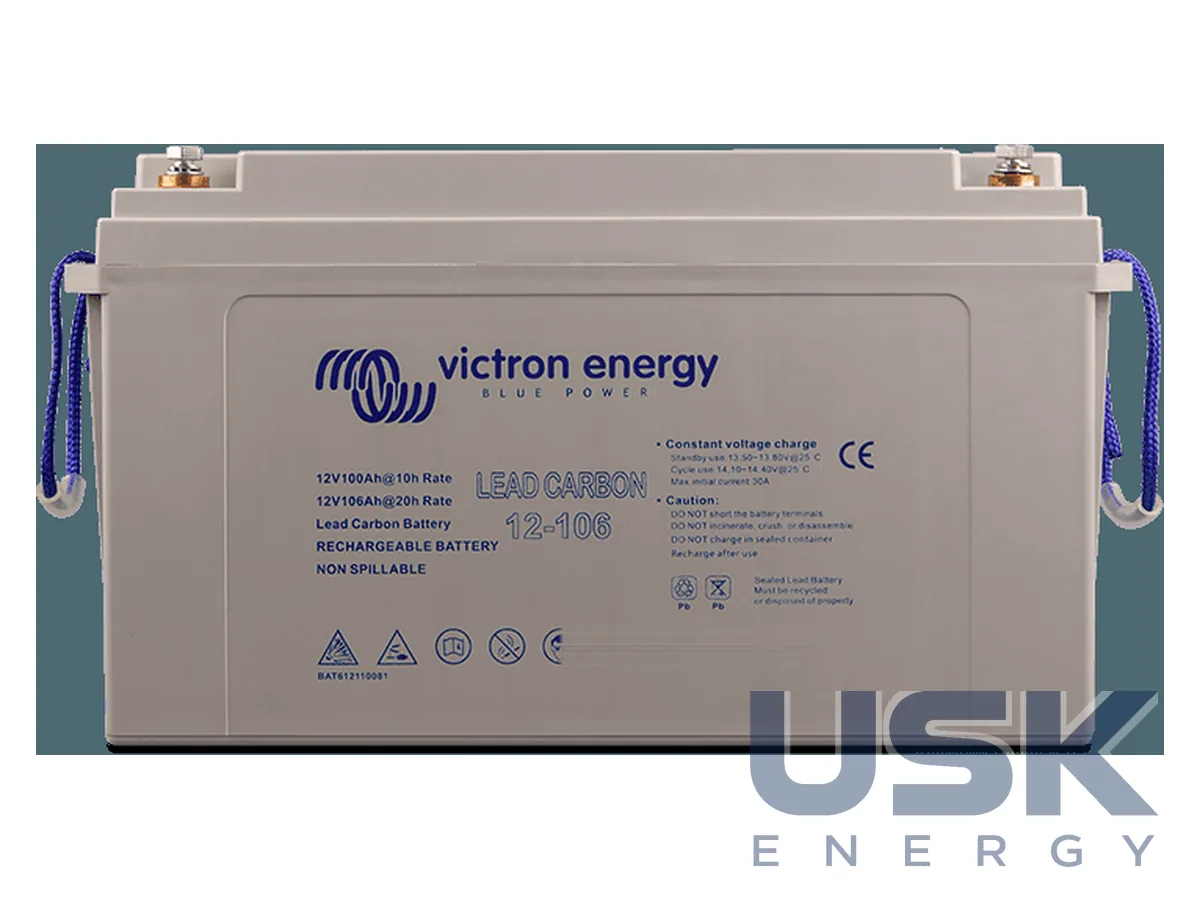
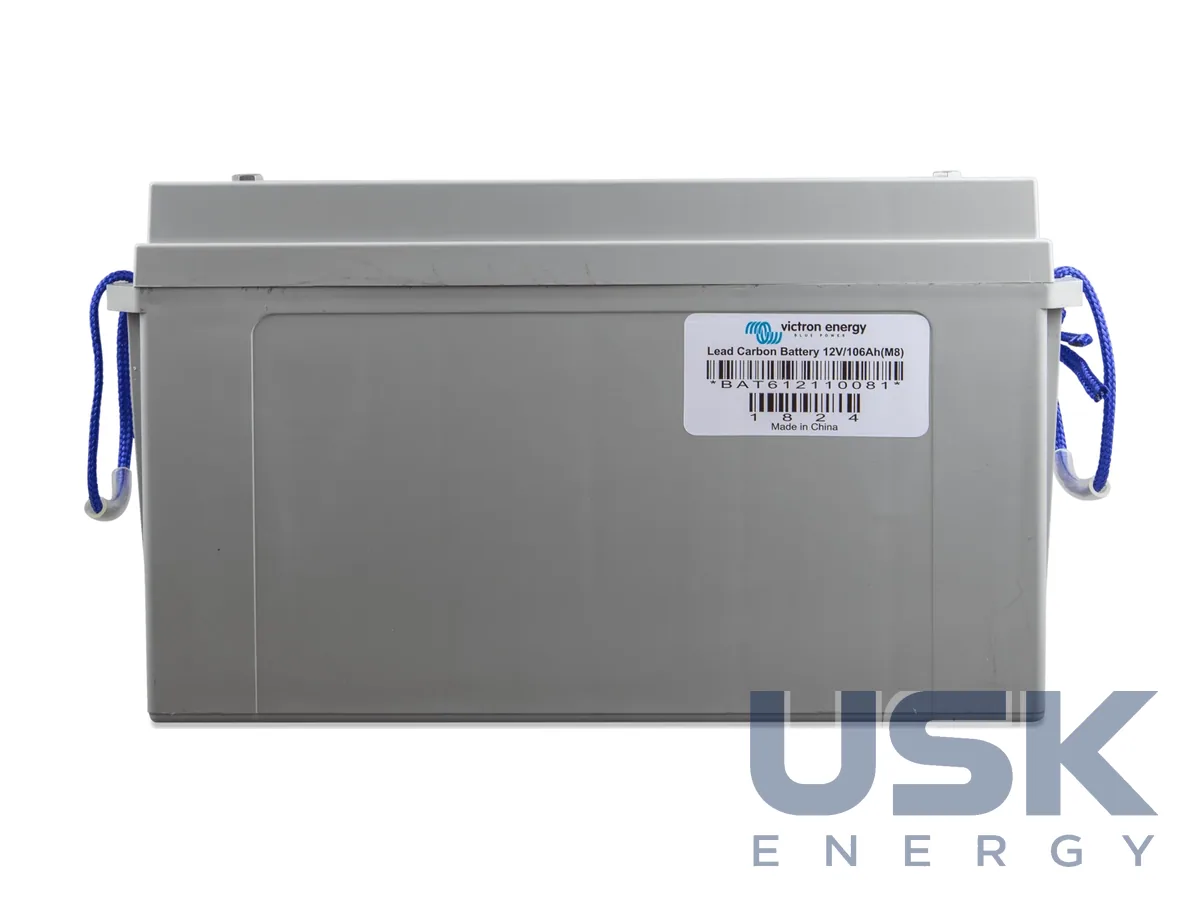
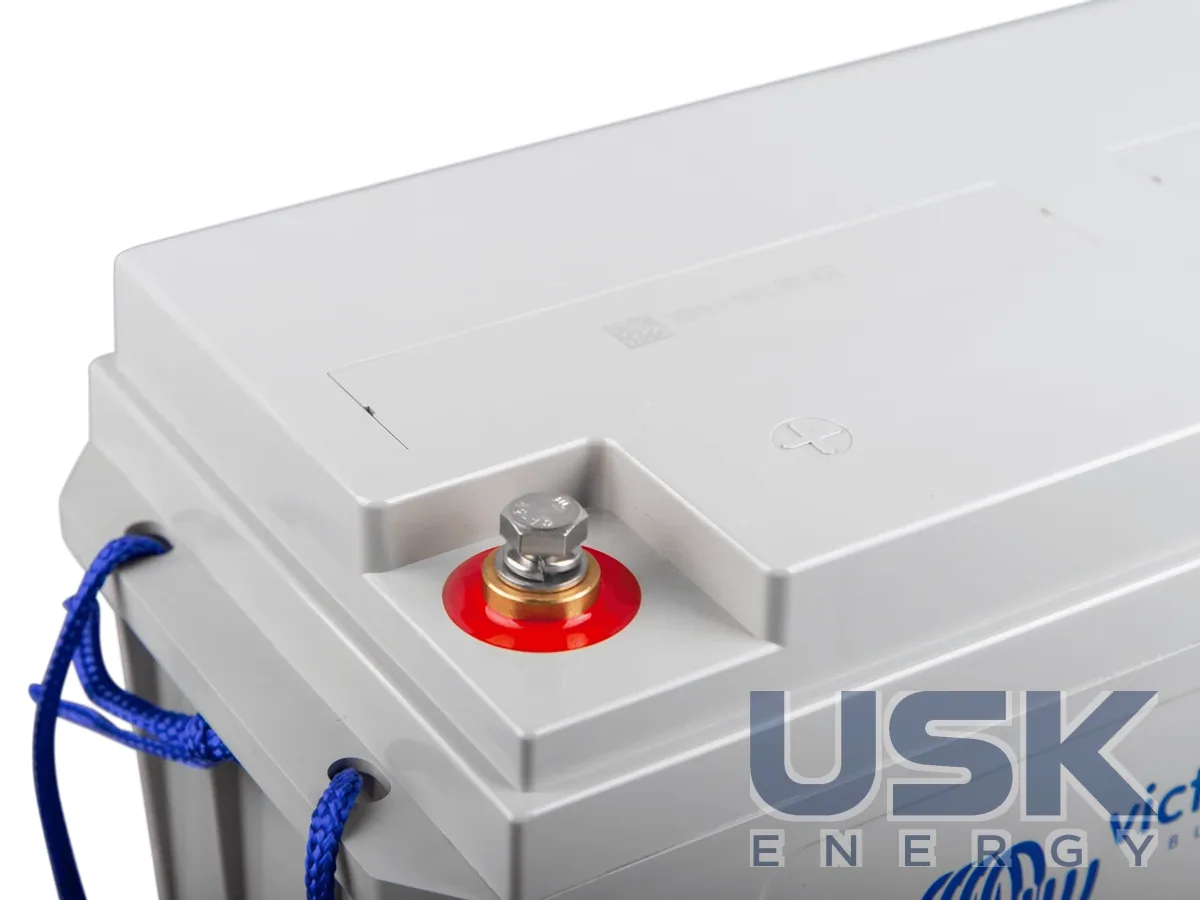
Lead Carbon — lead carbon batteries
Country: Netherlands · Model: Lead Carbon
The Lead Carbon battery, rated 12 V 160 Ah, handles frequent cycling and long periods at partial state of charge. It goes into solar systems where the battery is rarely fully charged.
- Technology
- VRLA, carbon in the negative plate
- Voltage
- 12 V
- Model
- 12 V 160 Ah
- Application
- heavy cycling, partial state of charge
Technical specifications
| Technology | VRLA, carbon in the negative plate |
|---|---|
| Voltage | 12 V |
| Model | 12 V 160 Ah |
| Application | heavy cycling, partial state of charge |
| Customs codes (for reference) | |
| HS code | 8507.20 |
| UKTZED code (Ukraine) | 8507208090 |
| CN code (EU) | 85072080 |
Specifications are taken from the manufacturer’s technical documentation. Updated . Customs codes are for reference only; the final code is determined at customs declaration for the specific model.
Description
Carbon is added to the negative plate, which raises resistance to sulfation. Standard lead-acid batteries lose capacity when left partially charged for long periods, while Lead Carbon is built for exactly that duty. Heavy daily cycling in a solar plant is its normal workload, not an exception. The battery is a sealed VRLA type that needs no topping up, so it can sit in a cabinet or on a rack next to the inverter. The 12 V block is wired in series to build a bank, two units for 24 V and four for 48 V. The 160 Ah rating is per battery and does not grow in a series string, so capacity is added with parallel strings.
How to choose
Lead Carbon is the pick when the bank cycles every day and goes weeks without a full charge, as an off-grid plant does in winter. If the battery mostly sits on float waiting for a grid outage, GEL / AGM Deep Cycle models of 90–270 Ah with 400 to 1,800 cycles depending on type and DoD will do. For a telecom rack the Telecom AGM 12 V 200 Ah with front terminals fits better. When moving to lithium, look at the Lithium Battery Smart on LiFePO4 with 2,500–5,000 cycles.
Request a price and lead time
Lead Carbon — lead carbon batteries. We reply within one business day.
Or email office@usk.ua or call +38 (044) 339-50-20.
FAQ
How does Lead Carbon differ from a standard lead-acid battery?
The negative plate contains carbon, so the battery copes better with partial charge and suffers less from sulfation.
What is the capacity of the Lead Carbon battery?
The 12 V model is rated 160 Ah.
Is Lead Carbon suitable for solar systems?
Yes, it is built for frequent cycling and partial state of charge, which is the normal duty in a solar system with storage.
Does the Lead Carbon battery need maintenance?
As a sealed VRLA battery it needs no water topping. What remains is checking terminal torque and the voltage spread between batteries in the bank.
How do I build a 48 V bank from 12 V Lead Carbon batteries?
Four 12 V 160 Ah batteries go in series, and the string stays at 160 Ah. For more reserve a second identical string is added in parallel.
Similar products
REQUEST
Need a price, lead time or replacement?
Send us a request and we will confirm the configuration, lead time and delivery terms. We reply by email.