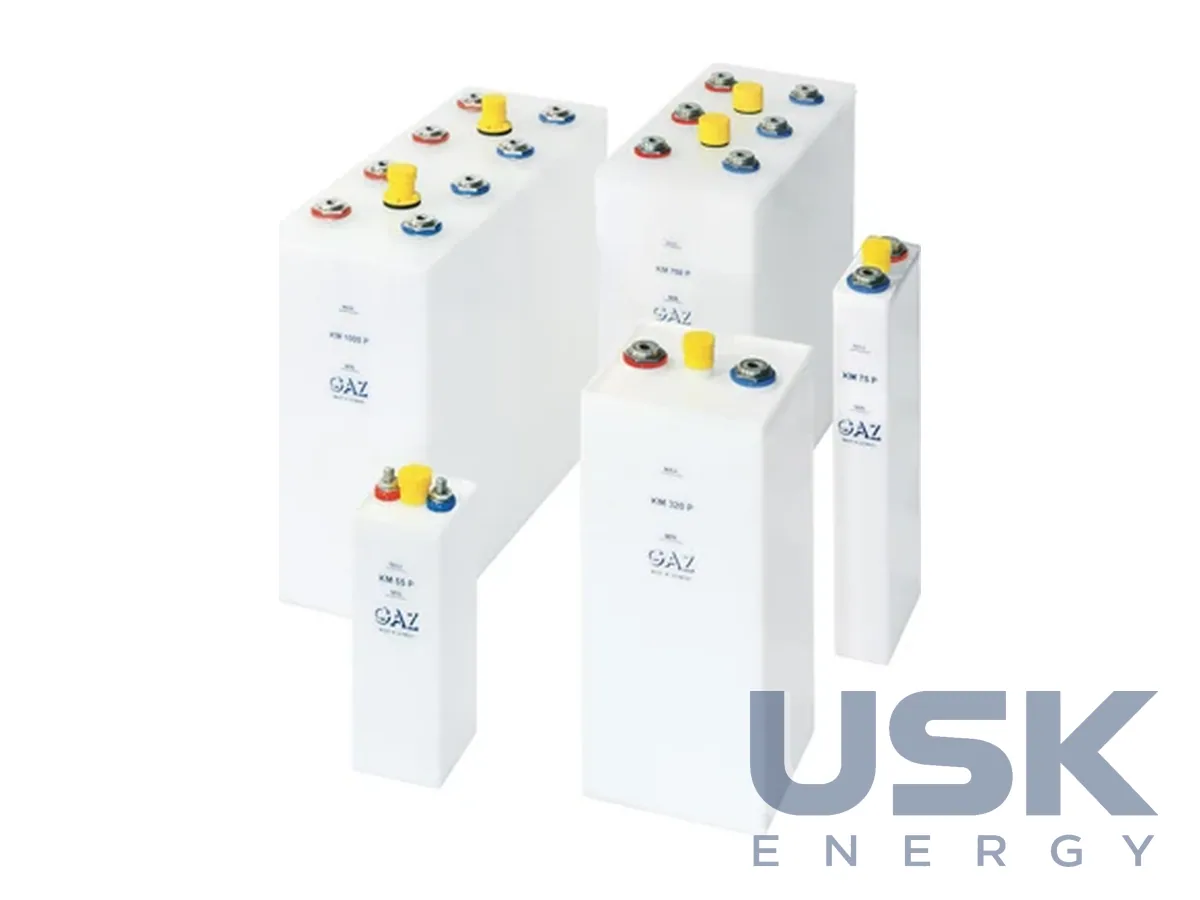
GAZ — nickel-cadmium pocket plate batteries
Country: USA · Model: GAZ
GAZ nickel-cadmium batteries with pocket plate electrodes operate from −50 to +70 °C and are rated for a service life of over 20 years. They serve railways, renewable plants, off-grid and telecom sites where the load follows a demanding cycle.
- Technology
- NiCd, pocket plate electrodes
- Operating temperature
- −50…+70 °C
- Service life
- over 20 years
- Design
- blocks, plastic or steel crates, racks and cabinets
Technical specifications
| Technology | NiCd, pocket plate electrodes |
|---|---|
| Operating temperature | −50…+70 °C |
| Service life | over 20 years |
| Design | blocks, plastic or steel crates, racks and cabinets |
| Customs codes (for reference) | |
| HS code | 8507.30 |
| UKTZED code (Ukraine) | 8507308000 |
| CN code (EU) | 85073080 |
Specifications are taken from the manufacturer’s technical documentation. Updated . Customs codes are for reference only; the final code is determined at customs declaration for the specific model.
Description
In the pocket plate design the active material sits in perforated steel pockets, so the plates do not shed under deep discharge or vibration. The alkaline electrolyte barely changes density during discharge, unlike the sulfuric acid of lead batteries. That makes the cells tolerant of undercharge and of long periods without recharge, which is normal at off-grid sites. The −50…+70 °C range covers unheated containers, trackside cabinets and rolling stock without dedicated climate control. Supply options are single blocks, sets in plastic or steel crates, and assemblies on racks or in cabinets. With a service life of over 20 years the battery pays back wherever a crew visit for replacement costs more than the cells.
How to choose
Site temperature and load profile decide the choice here, not the price per amp-hour. If the room is heated and the battery floats on a stable grid, lead-acid PowerSafe SBS XL or Genesis FPG gel blocks of 33–250 Ah are simpler. GAZ makes sense with frost down to −50 °C, on rolling stock and wherever the battery spends years cycling with undercharge. The housing type (crate, rack or cabinet) follows the installation spot.
Request a price and lead time
GAZ — nickel-cadmium pocket plate batteries. We reply within one business day.
Or email office@usk.ua or call +38 (044) 339-50-20.
FAQ
What temperature range do GAZ NiCd batteries handle?
The rated operating range is −50 to +70 °C, so the battery can go into unheated cabinets and containers.
What is the service life of GAZ nickel-cadmium batteries?
The maker states a service life of over 20 years when charging and maintenance rules are followed.
What sets pocket plate electrodes apart from other plate types?
Here the active material is packed into perforated steel pockets. It does not shed under vibration or deep discharge, which is why railways use these batteries.
In what formats are GAZ batteries supplied?
Options are single blocks, sets in plastic or steel crates, and assemblies on racks or in cabinets.
Are GAZ batteries suitable for solar and off-grid systems?
Yes, renewables and off-grid sites with demanding load cycles are among the main uses. The −50 to +70 °C margin matters at remote sites without heating.
Similar products
REQUEST
Need a price, lead time or replacement?
Send us a request and we will confirm the configuration, lead time and delivery terms. We reply by email.