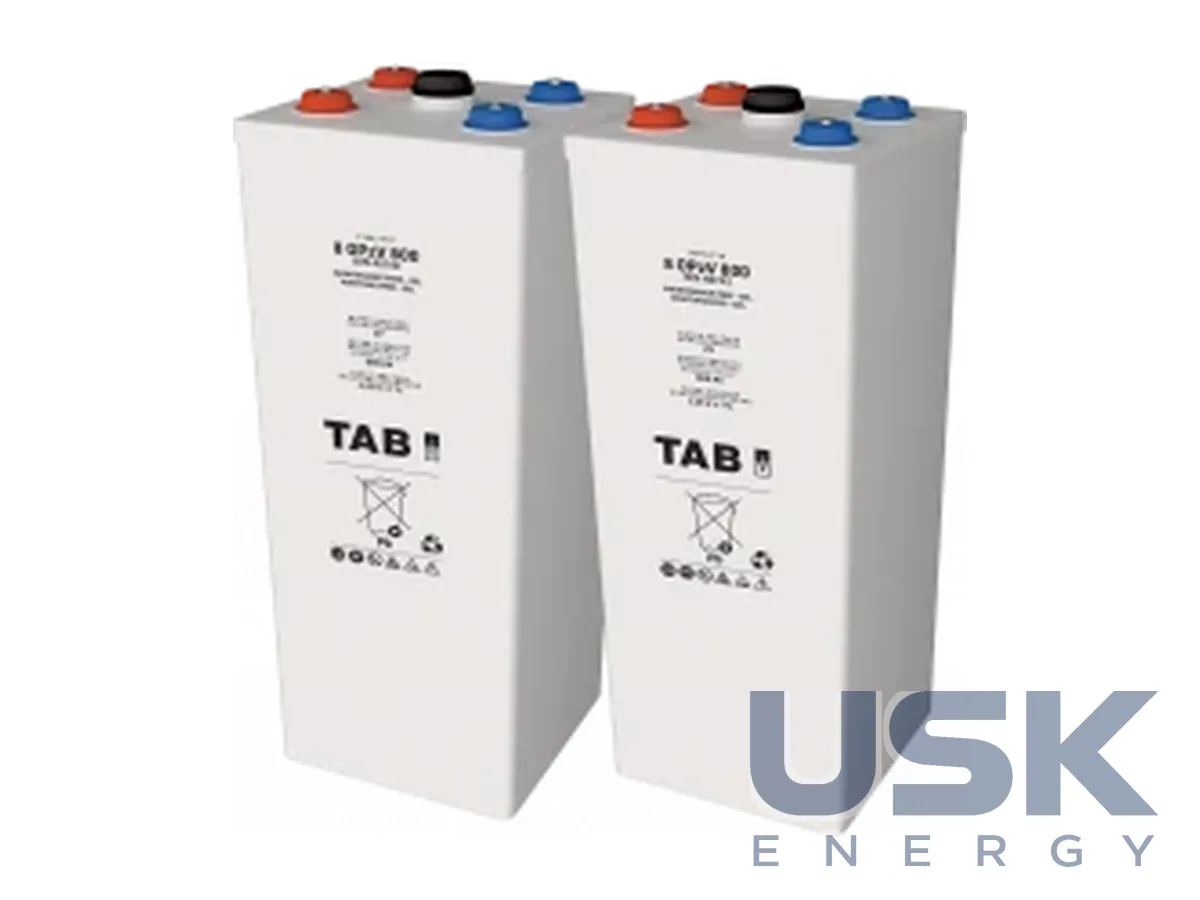
OPzV stationary gel batteries
Country: Slovenia · Model: OPzV
Stationary sealed gel OPzV batteries of the valve-regulated type (VRLA GEL) for standby power. The batteries work in float mode in telecom sites, at substations, in UPS and DC control power systems and deliver energy when the mains fails.
- Type
- OPzV (VRLA GEL)
Technical specifications
| Type | OPzV (VRLA GEL) |
|---|
Specifications are taken from the manufacturer’s technical documentation. Updated .
Description
In the designation OPzV the letter O means stationary design, Pz indicates gauntlet tubular positive plates, and V a sealed case. The electrolyte is thickened into a gel, so it does not spill or stratify, and the oxygen released during charging recombines inside the cell. No water needs to be added, and the safety valve opens only at excess pressure. The gauntlet plate holds the active mass in tubular sleeves, so the OPzV tolerates both years of float charge and deep discharges during long outages. Gas evolution in the sealed cell is minimal, so the battery can be placed on racks next to the equipment, and ventilation is calculated by the VRLA standards, which are milder than for flooded OPzS.
How to choose
The size of the OPzV is determined by the DC bus voltage and the time the battery must carry the load. The number of cells sets the voltage, and the capacity is chosen from discharge tables at constant current or constant power down to the end voltage allowed by the UPS or rectifier. Stationary cells are not suitable for electric forklifts and warehouse equipment, which need Motion traction monoblocs, in particular Motion GEL with gel electrolyte.
Request a price and lead time
OPzV stationary gel batteries. We reply within one business day.
Or email office@usk.ua or call +38 (044) 339-50-20.
FAQ
How do OPzV gel batteries differ from AGM?
In the OPzV the electrolyte is thickened into a gel and the positive plates are gauntlet type. Compared with AGM on flat pasted plates, such batteries tolerate deep discharges and high temperature better.
Does water have to be added to OPzV batteries?
No, the gases recombine inside the sealed cell. Maintenance comes down to checking cell voltages, temperature and tightening connections during scheduled inspections.
When is a lithium module better than OPzV?
When the battery is cycled daily, for example at a solar plant with a hybrid inverter. Then the e.module L5.1 LFP module of 51.2 V and 5.12 kWh is more appropriate, and for a commercial BESS the e.module H10.2 of 10.24 kWh and 140 A.
What charging mode do OPzV gel batteries need?
Float charging at stabilised voltage with temperature compensation. The voltage per cell and the charging current are taken from the data sheet, because overcharging dries out the gel and shortens the service life.
Similar products
REQUEST
Need a price, lead time or replacement?
Send us a request and we will confirm the configuration, lead time and delivery terms. We reply by email.