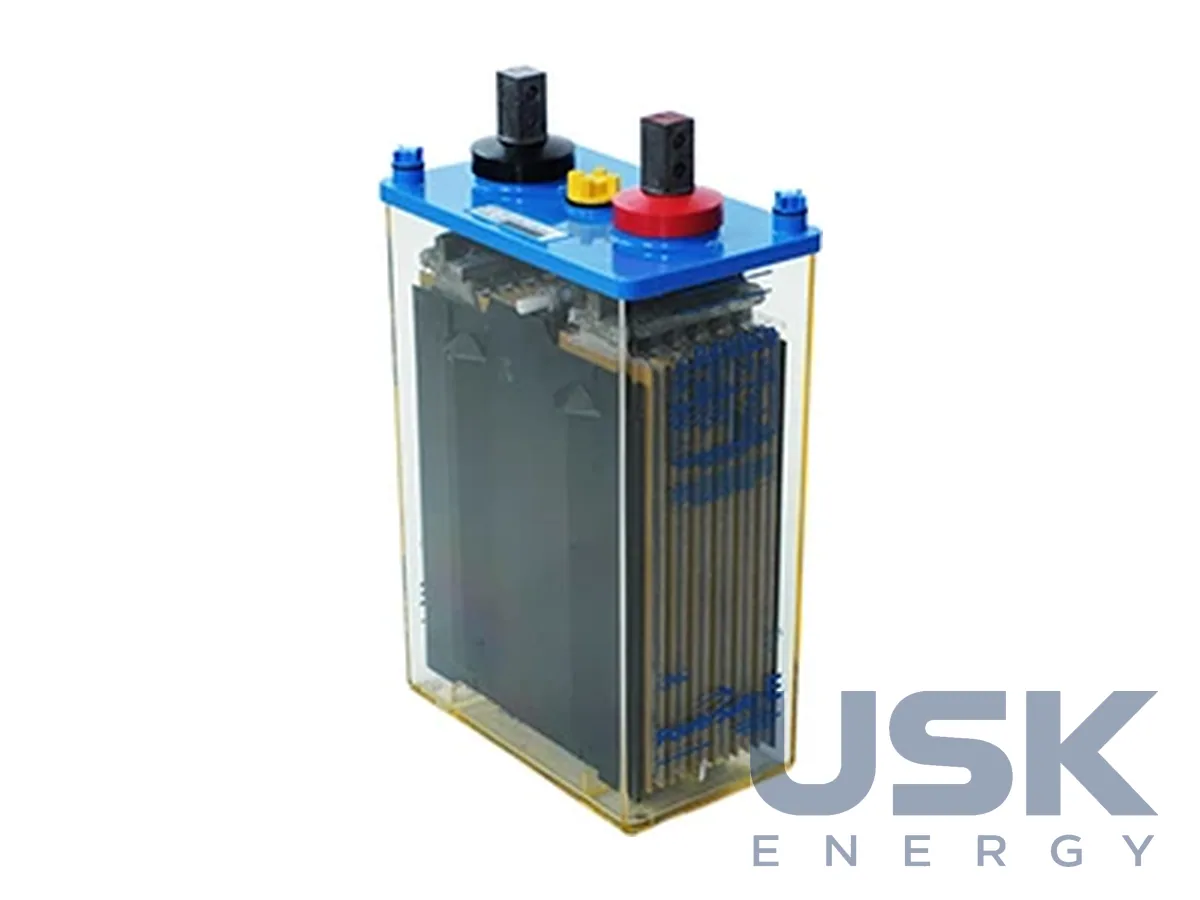
PowerSafe C / D / E / ESG / F / G / GN — vented cells for power utilities and telecom
Country: USA · Model: PowerSafe C, D, E, ESG, F, G, GN
Vented stationary cells and monoblocks with flat plates at 2–8 V, from 50 Ah in the C series up to 3,900 Ah in the G series at the 8-hour rate. They serve DC boards at substations and power plants and telecom centers.
- Technology
- vented lead-calcium and lead-antimony, flat plates
- Voltage
- 2–8 V
- Capacity
- C 50–200 Ah; E 215–850 Ah; ESG 187–935 Ah; D (DU/DSG) 295–1,600 Ah; F 840–1,810 Ah; G 930–3,900 Ah; GN 1,140–3,600 Ah (8 h)
- Application
- substations, power plants (GN for nuclear plants), telecom centers
Technical specifications
| Technology | vented lead-calcium and lead-antimony, flat plates |
|---|---|
| Voltage | 2–8 V |
| Capacity | C 50–200 Ah; E 215–850 Ah; ESG 187–935 Ah; D (DU/DSG) 295–1,600 Ah; F 840–1,810 Ah; G 930–3,900 Ah; GN 1,140–3,600 Ah (8 h) |
| Application | substations, power plants (GN for nuclear plants), telecom centers |
| Customs codes (for reference) | |
| HS code | 8507.20 |
| UKTZED code (Ukraine) | 8507208090 |
| CN code (EU) | 85072080 |
Specifications are taken from the manufacturer’s technical documentation. Updated . Customs codes are for reference only; the final code is determined at customs declaration for the specific model.
Description
The GN series has been installed at nuclear power plants since 1978, where emergency DC batteries face the strictest requirements. Plates are lead-calcium or lead-antimony. Calcium alloy gives a low float current and rare watering, antimony copes better with frequent cycling. The cells are vented, so the battery room needs exhaust ventilation and electrolyte level is checked on scheduled rounds. A flat plate delivers current well in the first minutes of discharge, which breaker operating mechanisms need. The capacity ladder is dense, series overlap and a choice can be made without a large margin.
How to choose
The series is chosen by capacity at the 8-hour rate. C covers 50–200 Ah, E 215–850 Ah, ESG 187–935 Ah, D (DU/DSG) 295–1,600 Ah, F 840–1,810 Ah, G 930–3,900 Ah and GN 1,140–3,600 Ah for nuclear plants. If the battery feeds a data center UPS with a discharge of about 15 minutes, DataSafe DX with 240–5,448 W/cell is the closer fit.
Request a price and lead time
PowerSafe C / D / E / ESG / F / G / GN — vented cells for power utilities and telecom. We reply within one business day.
Or email office@usk.ua or call +38 (044) 339-50-20.
FAQ
Where is the PowerSafe GN series used?
GN has served nuclear power plants since 1978, with 1,140–3,600 Ah at the 8-hour rate.
Which PowerSafe series has the highest capacity?
The G series, up to 3,900 Ah at the 8-hour rate. GN follows with 3,600 Ah.
How do lead-calcium plates differ from lead-antimony plates?
Calcium plates give lower float current and water loss, antimony plates handle cycling better. The 2–8 V range includes both.
What voltage do PowerSafe C, D, E, F, G cells have?
The range covers single cells and monoblocks of 2–8 V.
Similar products
REQUEST
Need a price, lead time or replacement?
Send us a request and we will confirm the configuration, lead time and delivery terms. We reply by email.