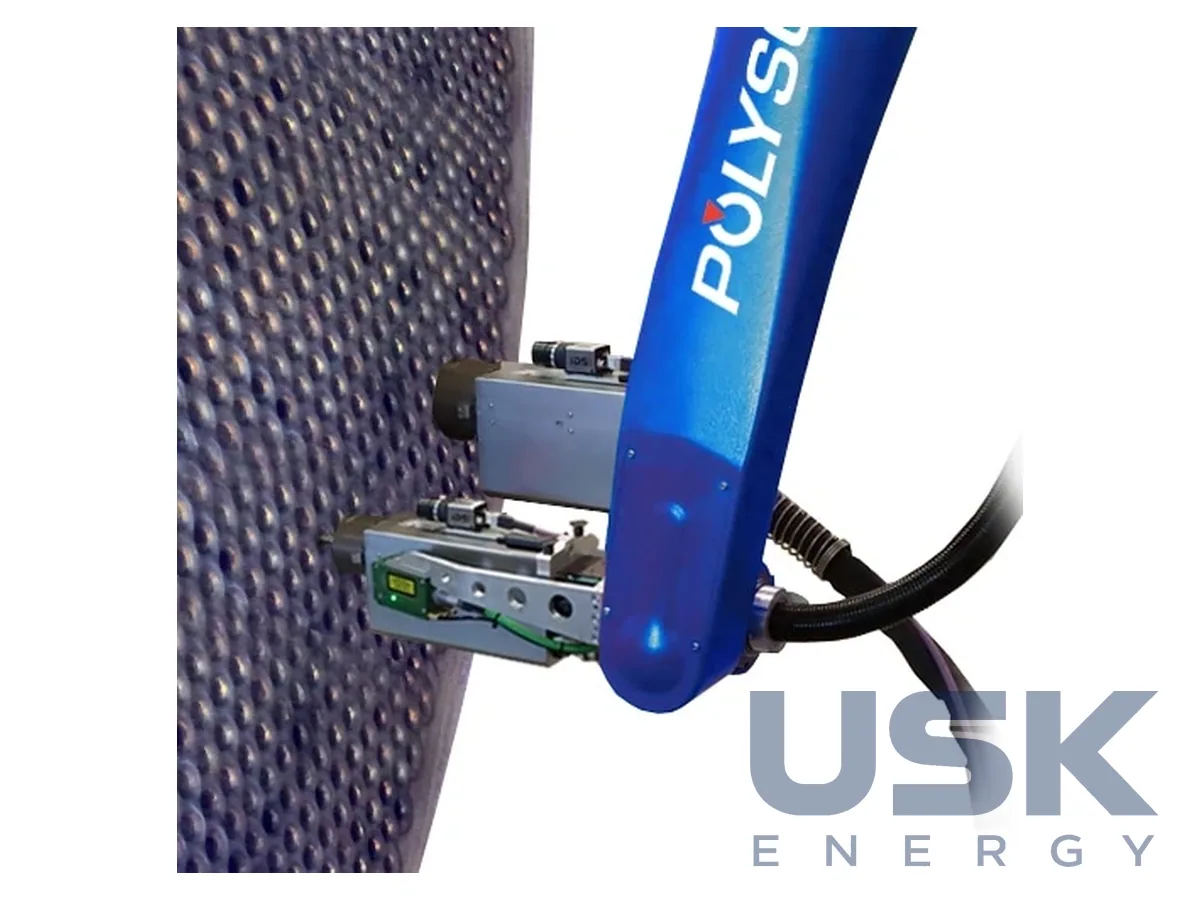
Robotic cell for welding tubes to a tubesheet
Country: · Model: Robotic tube-to-tubesheet cell
The robotic cell welds tube-to-tubesheet joints in continuous mode, without manual head setting. The robot moves to each next tube on its own using a laser sensor. It is installed in series production of heat exchangers, condensers and air coolers.
- Positioning
- self-positioning by laser sensor
- Programming
- offline
- Inspection
- quality control system
Technical specifications
| Positioning | self-positioning by laser sensor |
|---|---|
| Programming | offline |
| Inspection | quality control system |
Specifications are taken from the manufacturer’s technical documentation. Updated .
Description
The cell combines an industrial robot manipulator, an orbital head for tubesheets and a power source. Programs are created offline, and the built-in quality control system checks every weld. According to the manufacturer's description, the solution never stops, because the robot moves from tube to tube in sequence while the operator only watches the process. Welding is done by TIG with or without filler wire depending on the joint configuration, that is, for protruding, flush or recessed tubes. Wire feed and axes are run by power sources and mechanisms of the P6, PC and Polyfil series.
How to choose
The cell pays off on large heat exchangers with a large number of tubes, where manual head setting takes most of the time. According to the website, tubes in heat exchangers usually have an outside diameter of 19.05 to 50.8 mm and a wall thickness of 1.65 to 4.5 mm. The robot type, working area and productivity depend on the project and are not given in the sources. For individual critical joints without a robot, TP 60 or SPX Compact manual heads are taken.
Request a price and lead time
Robotic cell for welding tubes to a tubesheet. We reply within one business day.
Or email office@usk.ua or call +38 (044) 339-50-20.
FAQ
How does the robot find the next tube in the plate?
It positions the head on its own using laser sensor data, so manual setting is not needed.
Which tube-to-plate joint configurations can be welded?
Protruding tubes, tubes flush with the plate and recessed tubes. TIG welding is done with or without filler wire.
Can the cell be programmed without stopping production?
Yes, programs are created offline, and the built-in quality control system checks the result.
Which tubes are typically welded in heat exchangers?
An outside diameter of 19.05 to 50.8 mm and a wall thickness of 1.65 to 4.5 mm.
Similar products
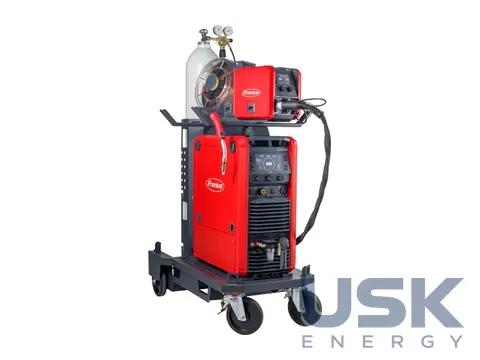 Fortis 270 / 320 / 400 / 500MIG/MAG welding power source 270–500 A (multiprocess)
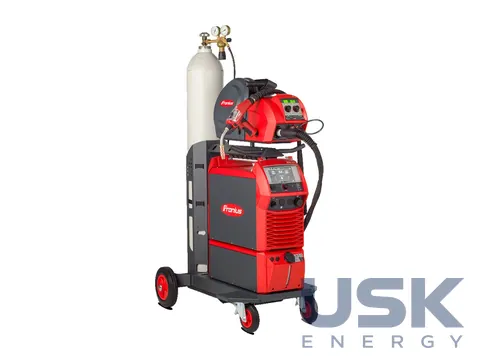 TPS/i (270i C, 320i C, 320i, 400i, 500i, 600i)MIG/MAG welding system 270–600 A
 iQ 1500 / iQ 3000 / iQ 4500iQ 1500 / iQ 3000 / iQ 4500 high-precision plasma systems 20–450 A for CNC cutting
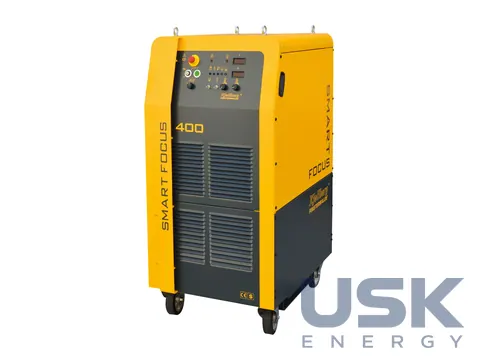 Smart Focus 130 / 200 / 300 / 400Smart Focus 130 / 200 / 300 / 400 plasma systems 35–400 A for machine cutting
REQUEST
Need a price, lead time or replacement?
Send us a request and we will confirm the configuration, lead time and delivery terms. We reply by email.