MATERIALS, ADHESIVES AND COATINGS
C-RAM FDSS / GDSS / GDX / FF-2 / FFS-125 / FGMM / FLX / FLX-800 / RGD-S thin magnetically filled elastomer radio absorbers, 300 MHz … 35 GHz
Country: · Model: C-RAM FDSS / GDSS / GDX / FF-2 / FFS-125 / FGMM / FLX / FLX-800 / RGD-S
Thin elastic radio absorbers on silicone rubber heavily filled with magnetic powders, for the range from 300 MHz to 35 GHz. They give noticeable absorption at a thickness of only 0.25–6 mm, so the sheets are simply bonded to metal.
- Material
- silicone rubber with magnetic filler (urethane to order, neoprene for FLX); electrically non-conductive
- FDSS
- 300 MHz – 3 GHz; 0.030 / 0.060 / 0.125 inch (0.76–3.2 mm); silicone up to +204 °C, urethane up to +121 °C
- GDSS / GDX
- GDSS 1–20 GHz, 0.060 inch; GDX 1–35 GHz, 0.030 inch; dielectric strength 10 kV/mm; > 10¹¹ Ω·cm
- FF-2
- ferrite in silicone, 500 MHz – 10 GHz; 1.0 mm 3.2 kg/m², 2.0 mm 6.3 kg/m²; 80 Shore A; −50…+200 °C
Technical specifications
| Material | silicone rubber with magnetic filler (urethane to order, neoprene for FLX); electrically non-conductive |
|---|---|
| FDSS | 300 MHz – 3 GHz; 0.030 / 0.060 / 0.125 inch (0.76–3.2 mm); silicone up to +204 °C, urethane up to +121 °C |
| GDSS / GDX | GDSS 1–20 GHz, 0.060 inch; GDX 1–35 GHz, 0.030 inch; dielectric strength 10 kV/mm; > 10¹¹ Ω·cm |
| FF-2 | ferrite in silicone, 500 MHz – 10 GHz; 1.0 mm 3.2 kg/m², 2.0 mm 6.3 kg/m²; 80 Shore A; −50…+200 °C |
| FFS-125 / FGMM | ≈ −10 dB, FFS-125 at 2–12 GHz (3.2 mm, 11.8 kg/m²), FGMM at 4–10 GHz (1.01 mm, 4.9 kg/m²); −50…+200 °C; 85 Shore A |
| FLX | narrow-band tuned, ≈ 99 % absorption (≤ −20 dB) at the design frequency of 1–35 GHz; silicone −62…+149 °C, urethane −62…+135 °C, neoprene −43…+100 °C |
| FLX-800 | resonance ≈ 850 MHz; FLX-U-800 up to +120 °C |
| RGD-S | grades -117, -124, -192; 0.25–6.35 mm; density 4.0; CTE 6·10⁻⁵ 1/°C |
| Format and mounting | sheets 305×305 mm; silicone RTV adhesive (C-BOND 255) with C-PRIME 215 primer or a self-adhesive PPGA/PSA layer (−40…+121 °C) |
Specifications are taken from the manufacturer’s technical documentation. Updated .
Description
Magnetic losses damp surface currents and cavity resonances, reduce radar cross section and serve as matched loads and attenuators in waveguides. The sheets do not conduct current and are flexible, and in GDX and FF-2 the dielectric strength reaches 10 kV/mm. FDSS has the highest losses at 300 MHz – 3 GHz in thicknesses of 0.76, 1.52 and 3.2 mm, GDSS works at 1–20 GHz at 1.52 mm, GDX at 1–35 GHz at 0.76 mm, and the ferrite FF-2 at 500 MHz – 10 GHz at 1 or 2 mm (3.2 or 6.3 kg/m²). The broadband FFS-125 and FGMM reduce reflection by about 10 dB, at 2–12 GHz (3.2 mm, 11.8 kg/m²) and 4–10 GHz (1.01 mm, 4.9 kg/m²) respectively. The resonant FLX are tuned to a frequency within 1–35 GHz, where they absorb about 99 % of the energy (−20 dB or better), and FLX-800 is designed for the cellular band around 850 MHz. RGD-S, an iron-filled silicone of grades -117, -124 and -192, 0.25–6.35 mm thick, is used for loads and attenuators, and grade -192 has the highest losses. The silicone grades work from −50 to +200 °C. Tight contact with metal is ensured by a surface that is sanded and degreased with alcohol, with C-PRIME 215 primer and C-BOND 255 adhesive. Sheets are 305×305 mm, and the self-adhesive layer works from −40 to +121 °C but is not recommended for sheets thicker than 3.2 mm.
How to choose
First establish the range and the task. To suppress surface waves take FDSS, GDSS, GDX or the ferrite FF-2, to reduce reflection over a wide sector of angles FFS-125 or FGMM, and for a narrow band at a given frequency FLX. Loads in waveguides are made of RGD-S. The base is silicone by default; urethane or neoprene are ordered when needed.
Request a price and lead time
C-RAM FDSS / GDSS / GDX / FF-2 / FFS-125 / FGMM / FLX / FLX-800 / RGD-S thin magnetically filled elastomer radio absorbers, 300 MHz … 35 GHz. We reply within one business day.
Or email office@usk.ua or call +38 (044) 339-50-20.
FAQ
What thickness and range does FDSS have?
Thicknesses of 0.76, 1.52 and 3.2 mm at 300 MHz – 3 GHz. The silicone version works up to +204 °C, the urethane one up to +121 °C.
What absorption does FLX give?
About 99 % of the energy (−20 dB or better) at the design frequency within 1–35 GHz. FLX-800 is tuned to about 850 MHz.
How is a radio absorber bonded to metal?
The surface is sanded, degreased with alcohol, and silicone primer C-PRIME 215 and adhesive C-BOND 255 are applied. The alternative is a self-adhesive layer for −40…+121 °C.
How does FFS-125 differ from FGMM?
Both reduce reflection by about 10 dB. FFS-125 works at 2–12 GHz at 3.2 mm, FGMM at 4–10 GHz at 1.01 mm.
Similar products
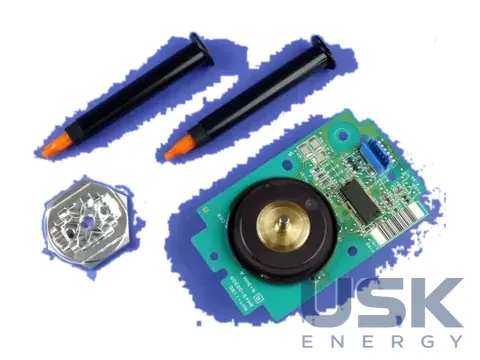 UV15DC80 / UV22DC80-1 / UV26DC / LED401 / LED422DC90Dual-Cure Systems (UV/LED + Heat) for Shadow Areas
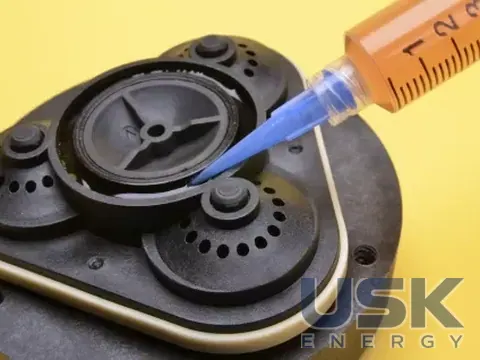 EP21TP-2NV / EP21TPFL-1 / EP21TPHT / EP30D-7 / Super Gel 9Epoxy-Polysulfide and Urethane-Modified Flexible Systems
 TUK / MiniTUKTouch-Up Kits for Two-Component Aviation Primers and Enamels
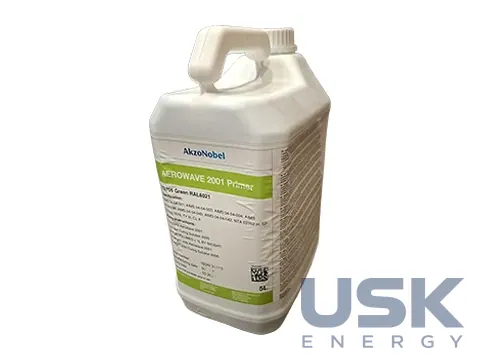 Aerowave 2001 / 2002 / 2003 / 3003 / 5001 / Filler 2501Waterborne System of Primers, Epoxy and Polyurethane Enamels (Airbus, Eurofighter, Leonardo)
REQUEST
Need a price, lead time or replacement?
Send us a request and we will confirm the configuration, lead time and delivery terms. We reply by email.