BATTERY MANAGEMENT SYSTEMS (BMS)
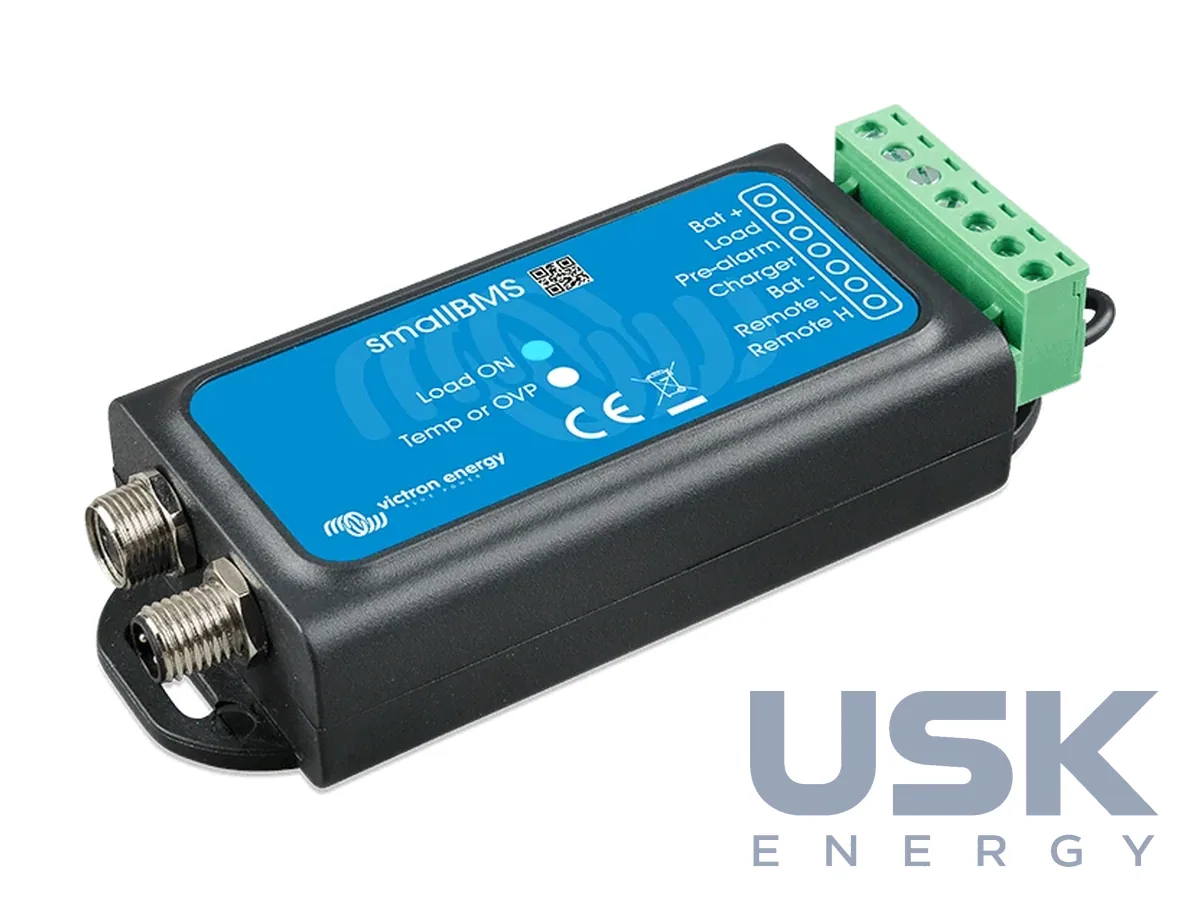
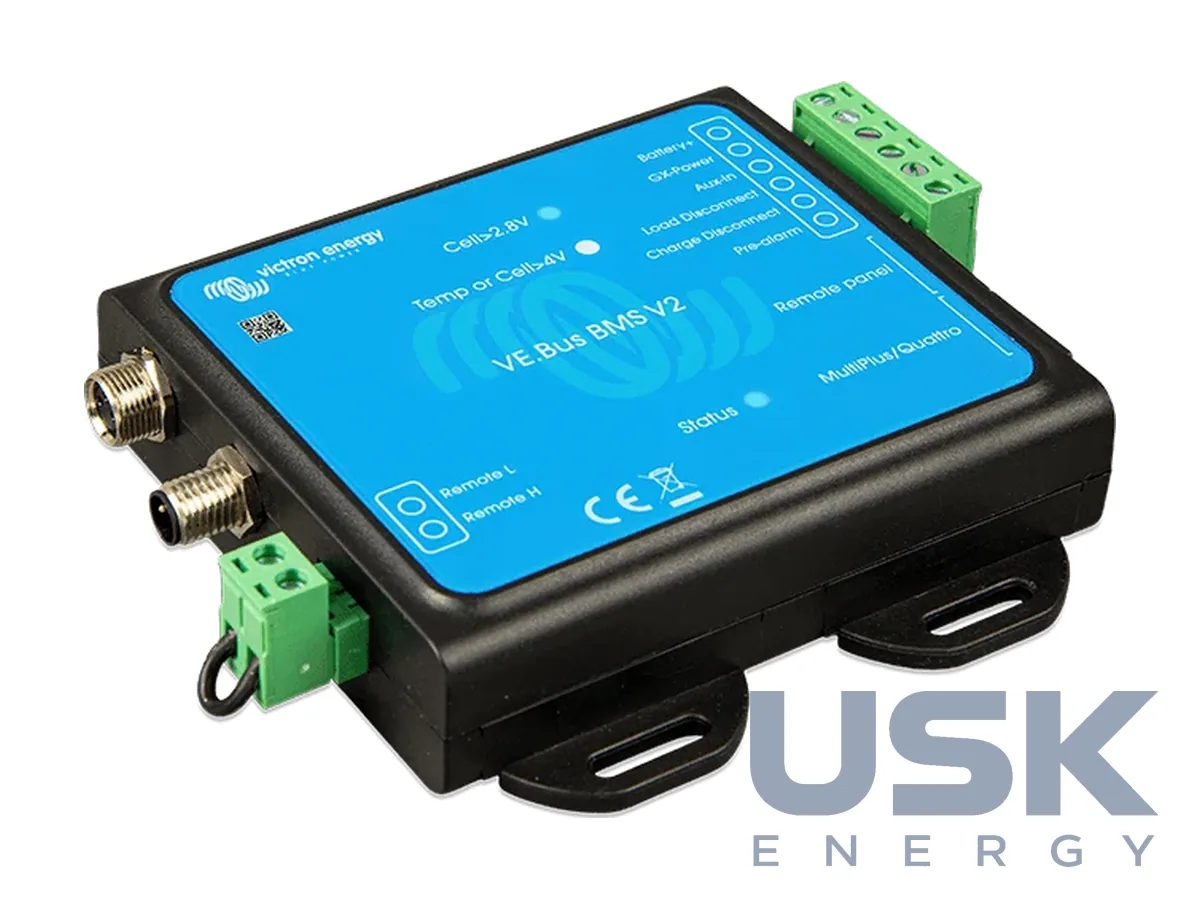
VE.Bus BMS and smallBMS — LiFePO4 battery management systems
Country: Netherlands · Model: VE.Bus BMS / smallBMS
The VE.Bus BMS and smallBMS battery management systems cover 9–70 V, which means 12/24/48 V systems. They protect every cell of lithium batteries and control chargers and loads.
- Voltage range
- 9–70 V (12/24/48 V systems)
- VE.Bus BMS
- controls MultiPlus/Quattro via VE.Bus, bank up to 1,500 Ah 48 V
- smallBMS
- simplified version with pre-alarm
- Versions
- V2, NG
Technical specifications
| Voltage range | 9–70 V (12/24/48 V systems) |
|---|---|
| VE.Bus BMS | controls MultiPlus/Quattro via VE.Bus, bank up to 1,500 Ah 48 V |
| smallBMS | simplified version with pre-alarm |
| Versions | V2, NG |
| Customs codes (for reference) | |
| HS code | 9032.89 |
| UKTZED code (Ukraine) | 9032890000 |
| CN code (EU) | 90328900 |
Specifications are taken from the manufacturer’s technical documentation. Updated . Customs codes are for reference only; the final code is determined at customs declaration for the specific model.
Description
The VE.Bus BMS controls MultiPlus and Quattro inverter/chargers directly over the VE.Bus link, so the inverter stops charging or inverting on a BMS command without extra relays. It handles a bank of up to 1,500 Ah at 48 V. The smallBMS is simpler and gives a pre-alarm before it disconnects the load, which leaves time to shed load or start a generator. Current versions are labeled V2 and NG. When a cell leaves its safe limits, the BMS stops charging or discharging. DC loads and chargers that are not on VE.Bus are switched through the BMS control outputs, for example via a battery protect relay or a remote on/off input.
How to choose
The choice follows the inverter. With a MultiPlus or Quattro on VE.Bus the VE.Bus BMS does the job, while a system of DC loads and chargers only gets by with the smallBMS. For a 12 V vehicle with an alternator, the Smart BMS CL 12-100 or Smart BMS 12-200 adds alternator current limiting and serves Lithium Battery Smart 12.8 V banks of up to 20 batteries. High DC currents call for the Lynx Smart BMS at 500 or 1,000 A, which carries a contactor and a shunt monitor and also serves Lithium NG.
Request a price and lead time
VE.Bus BMS and smallBMS — LiFePO4 battery management systems. We reply within one business day.
Or email office@usk.ua or call +38 (044) 339-50-20.
FAQ
What bank size does the VE.Bus BMS support?
Up to 1,500 Ah at 48 V.
What voltage range does the smallBMS cover?
9–70 V, covering 12/24/48 V systems.
How does the smallBMS differ from the VE.Bus BMS?
The smallBMS is simpler and gives a pre-alarm, while the VE.Bus BMS controls MultiPlus and Quattro units over VE.Bus.
Which BMS goes with Lithium NG batteries?
Lithium NG needs the Lynx Smart BMS NG, rated 500 or 1,000 A. The VE.Bus BMS and smallBMS work in the 9–70 V range with other lithium batteries.
What happens when a cell goes out of limits?
The BMS stops charging or discharging. With the smallBMS the pre-alarm comes first, and only then is the load cut.
Similar products
REQUEST
Need a price, lead time or replacement?
Send us a request and we will confirm the configuration, lead time and delivery terms. We reply by email.