


Nuclear / Hazardous / Cryogenic motors for special conditions: radiation-resistant (up to 3.5·10⁹ rad), for hazardous Class I/II Div. 2 areas, low-temperature down to −73 °C
Country: · Model: Nuclear / Hazardous / Cryogenic
Three versions of motors up to 300 hp (about 224 kW) for voltages up to 600 V for special conditions, namely radiation-resistant, for hazardous Class I and II Division 2 areas, and low-temperature down to −73 °C. All are built on the basis of standard single-speed, multi-speed, SS-100 inverter and high-speed motors.
- Type
- induction (single-speed, multi-speed, wound-rotor), PM and reluctance
- Power
- up to 300 hp (≈224 kW)
- Speed
- 3600 … 300 rpm; multi-speed; variable
- Voltage
- up to 600 V, 3 phase; 60 Hz, up to 2000 Hz from an inverter
Technical specifications
| Type | induction (single-speed, multi-speed, wound-rotor), PM and reluctance |
|---|---|
| Power | up to 300 hp (≈224 kW) |
| Speed | 3600 … 300 rpm; multi-speed; variable |
| Voltage | up to 600 V, 3 phase; 60 Hz, up to 2000 Hz from an inverter |
| Radiation resistance | total lifetime dose 3.5·10⁹ rad (≈3.5·10⁷ Gy); no Teflon or silicone rubber; stainless steel shaft |
| Hazardous areas | Class I and II, Division 2; no sparking parts or brushes; explosion-proof terminal box; pressurized purging; PM motors have CSA Class I Div. 2 certificate |
| Low temperatures | ambient down to −100 °F (≈−73 °C) |
| Frame | cast iron; stainless steel to order |
| Insulation | class B, F, H, VPI; special radiation-resistant system |
Specifications are taken from the manufacturer’s technical documentation. Updated .
Description
Radiation-resistant motors are designed to the requirements of the nuclear customer and are fitted to cranes and hoists that move radioactive materials and remove waste. The proprietary insulation withstands a total dose of 3.5·10⁹ rad over the whole service life, the frame and end shields are cast iron, the shaft is stainless steel, and there is no Teflon or silicone rubber in the design. Three variants of nuclear-grade materials are available for a specific radiation zone. According to the manufacturer, such motors work on the trolley hoists of the bridge system of the New Safe Confinement at the Chornobyl nuclear power plant, and direct replacement motors exist for polar cranes, cask handling cranes and fans at nuclear plants built in the 1940s–1960s. The version for Class I and II, Division 2 has no sparking elements or brushes, and has an explosion-proof terminal box, sealed thermal switches and purging with clean air, while synchronous permanent-magnet motors have a CSA certificate for Class I, Division 2. Low-temperature motors work at an ambient temperature down to −100 °F (about −73 °C), taking into account thermal deformation and protection against moisture and condensation.
How to choose
The choice is made by environment, not by power, which reaches 300 hp in all three versions. For a radiation zone take the radiation-resistant version rated 3.5·10⁹ rad, for areas where flammable gases may appear only in an accident Class I and II, Division 2, and for freezing and cryogenic processes the low-temperature version down to −73 °C. The base motor is selected from the standard lines by speed and duty.
Request a price and lead time
Nuclear / Hazardous / Cryogenic motors for special conditions: radiation-resistant (up to 3.5·10⁹ rad), for hazardous Class I/II Div. 2 areas, low-temperature down to −73 °C. We reply within one business day.
Or email office@usk.ua or call +38 (044) 339-50-20.
FAQ
What radiation dose do radiation-resistant motors withstand?
A total dose of 3.5·10⁹ rad over the whole service life. For this a proprietary insulation system and a stainless steel shaft are used, without Teflon or silicone rubber.
For which hazardous areas are the motors intended?
For Class I and II, Division 2, where flammable liquids or gases appear only under abnormal conditions. The motor has no sparking elements or brushes.
Down to what temperature do low-temperature motors work?
Down to an ambient temperature of −100 °F (about −73 °C). They are used in freezing equipment, cryogenic processes and LNG facilities.
What power and voltage do these motors have?
Up to 300 hp (about 224 kW) at voltages up to 600 V. From an inverter the supply frequency reaches 2000 Hz.
Where do motors already work in radiation zones?
According to the manufacturer, on the trolley hoists of the bridge system of the New Safe Confinement at the Chornobyl nuclear power plant and on a mobile tool platform.
Similar products
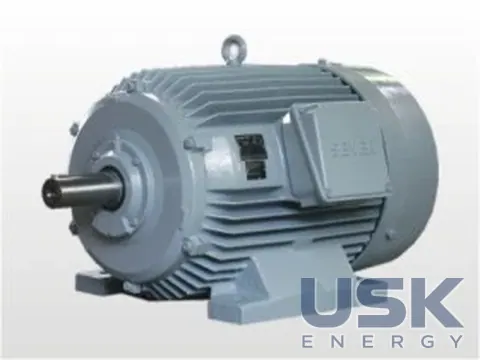 3.ZKELow-voltage IE3 induction motor, 18.5–1000 kW
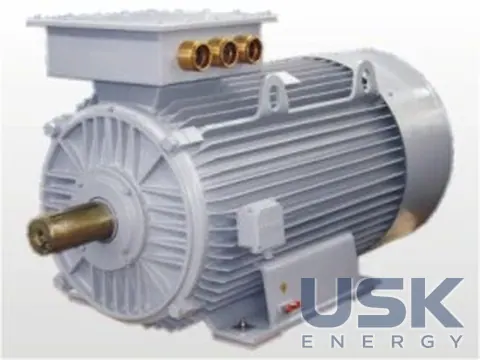 2.RZKITLow-voltage induction motor for operation from a frequency converter, 18.5–2500 kW
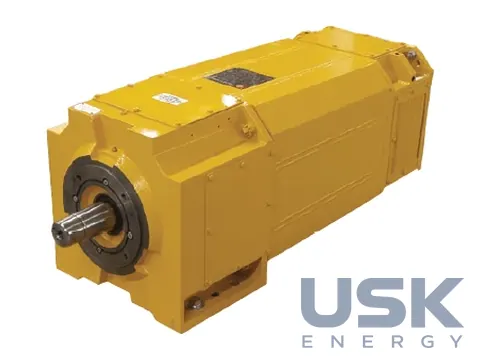 HAW12 / HAW13 / HAW20 / HAW22 / HAW29Drilling induction motors 600–2000 hp, 575 V, for variable-frequency drive
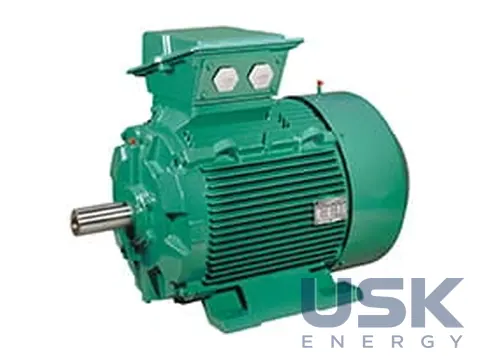 IMfinity FLSESThree-phase LV induction motors in cast-iron frame IE3/IE4, 0.75–900 kW
REQUEST
Need a price, lead time or replacement?
Send us a request and we will confirm the configuration, lead time and delivery terms. We reply by email.