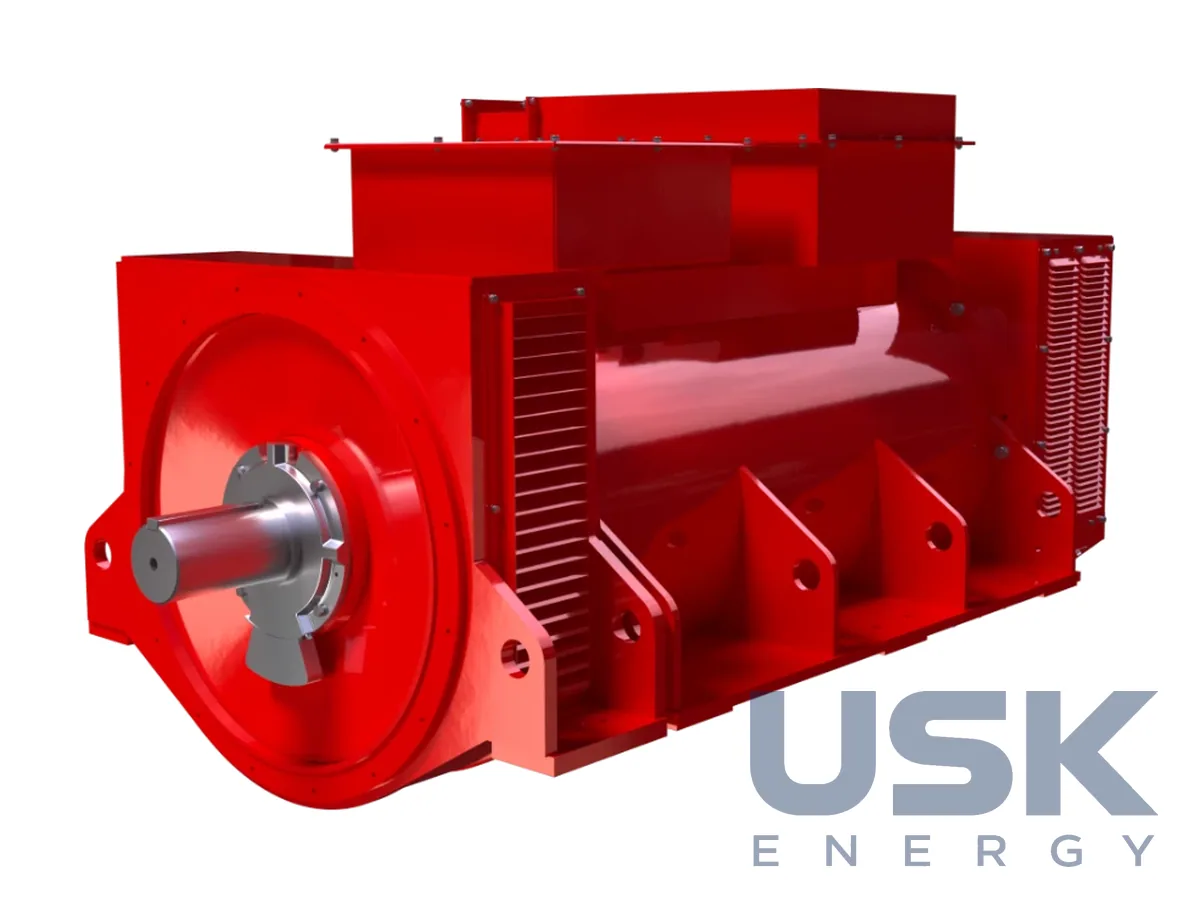
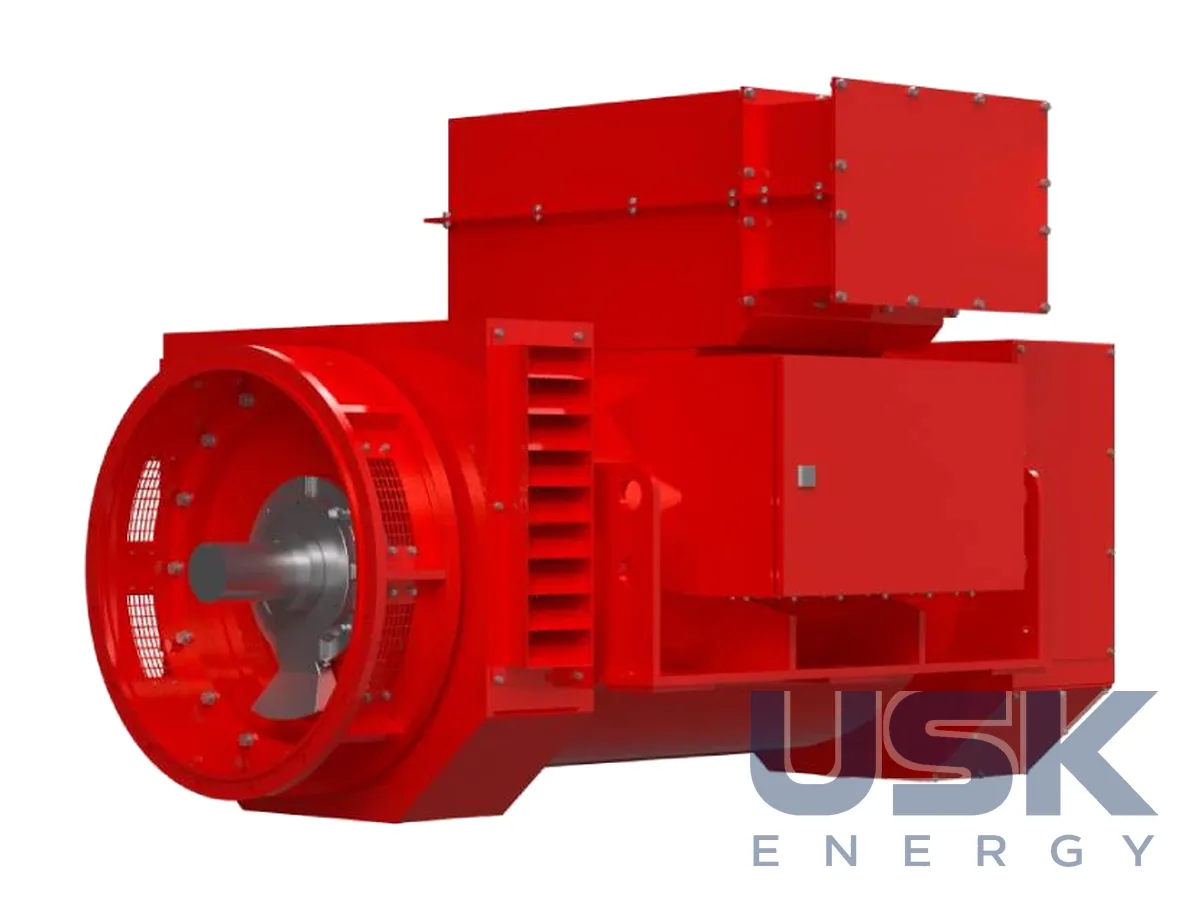
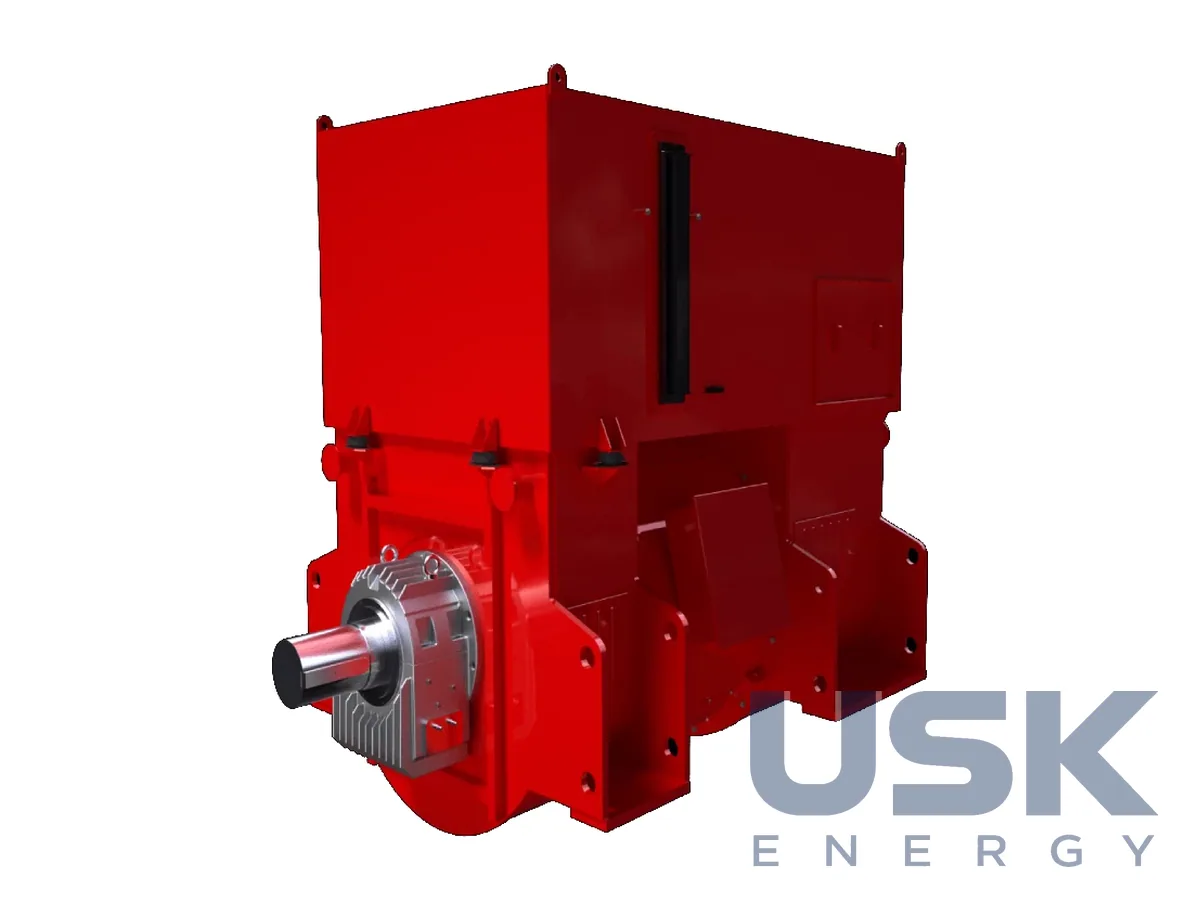
AvK DSG 62–144 — low-voltage synchronous generator 400–690 V, 600–8500 kVA
Country: United Kingdom · Model: DSG 62–144
The DSG series of low-voltage synchronous generators with a salient-pole rotor and a form-wound winding for 400–690 V and 600–8500 kVA. Seven frame sizes, DSG62, DSG74, DSG86, DSG99, DSG114, DSG125 and DSG144, cover 4 to 10 poles. They go to ship power plants, drilling platforms, mining operations, data centers and prime power.
- Frame sizes
- DSG62, DSG74, DSG86, DSG99, DSG114, DSG125, DSG144
- Output
- from 600 kVA (DSG74) to 7000 kVA 50 Hz / 8500 kVA 60 Hz (DSG125); DSG144 — 6600 kVA 60 Hz
- Voltage
- 400–690 V (DSG125/144 — 690 V)
- Number of poles
- 4–10
Technical specifications
| Frame sizes | DSG62, DSG74, DSG86, DSG99, DSG114, DSG125, DSG144 |
|---|---|
| Output | from 600 kVA (DSG74) to 7000 kVA 50 Hz / 8500 kVA 60 Hz (DSG125); DSG144 — 6600 kVA 60 Hz |
| Voltage | 400–690 V (DSG125/144 — 690 V) |
| Number of poles | 4–10 |
| Winding | form-wound (formed stator coils), pitch 2/3–5/6 |
| Excitation | auxiliary winding; PMG — option |
| AVR | DECS100, DECS150, DECS250, DM110, UNITROL 1010/1020 |
| Insulation | class H, VPI |
| Protection | IP23; IP44, IP54, IP55 |
| Cooling | IC01, IC611/IC616 (air-to-air), IC81W (air-to-water) |
| Bearings | rolling or split sleeve |
Specifications are taken from the manufacturer’s technical documentation. Updated .
Description
The frame is a rigid steel one, the stator has formed coils, the rotor is assembled from flat copper windings in wedges, and the damper winding suppresses harmonics in parallel operation. The insulation is class H with vacuum pressure impregnation VPI, and the winding pitch is 2/3–5/6. The brushless excitation is fed from an auxiliary stator winding and gives a short-circuit current of more than 3 times rated; a PMG sub-exciter is optional. The regulators DECS100, DECS150, DECS250, DM110, UNITROL 1010 and 1020 hold ±0.5 % in island mode. The protection is IP23 (IP44 for the DSG125 and DSG144), and optionally IP44, IP54, IP55. The cooling is IC01, IC611/IC616 for dusty environments and IC81W for ships and power plants.
How to choose
The choice starts with the output and the number of engine poles. The DSG62 gives 650–1100 kVA at 50 Hz (up to 1320 kVA at 60 Hz) on 4 poles, the DSG74 gives 600–2000 kVA (up to 2400) on 4–8 poles, the DSG86 gives 670–2990 kVA (up to 3408) on 4–10, the DSG99 gives 1220–4700 kVA (up to 5300) on 4–10, the DSG114 gives 2080–5000 kVA (up to 5940) on 6–10, and the DSG125 gives 4200–7000 kVA (up to 8500) on 8–10 poles. The DSG144 gives 6600 kVA at 60 Hz on 10 poles, and the DSG125 and DSG144 are built only for 690 V.
Request a price and lead time
AvK DSG 62–144 — low-voltage synchronous generator 400–690 V, 600–8500 kVA. We reply within one business day.
Or email office@usk.ua or call +38 (044) 339-50-20.
FAQ
What voltage are the DSG generators built for?
400–690 V. For the DSG125 and DSG144, only 690 V.
Which voltage regulators does the DSG support?
The DECS100, DECS150, DECS250, DM110 and UNITROL 1010 and 1020. They hold the voltage within ±0.5 % in island mode.
What cooling is used in the DSG?
IC01 as standard. For dusty environments there are the air-to-air IC611/IC616, and for ships and power plants the air-to-water IC81W.
Are the DSG74 and DSG86 suitable for locomotives?
Yes, they are also used as traction generators for diesel locomotives, but this sector is covered in a separate item.
What protection rating do the DSG have?
IP23 as standard, and IP44 for the DSG125 and DSG144. Optionally IP23 with filters, IP44, IP54 and IP55.
Similar products
 3.ZKELow-voltage IE3 induction motor, 18.5–1000 kW
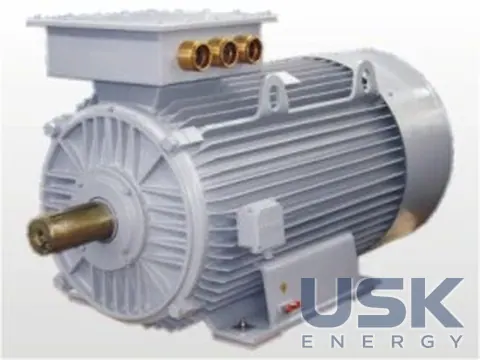 2.RZKITLow-voltage induction motor for operation from a frequency converter, 18.5–2500 kW
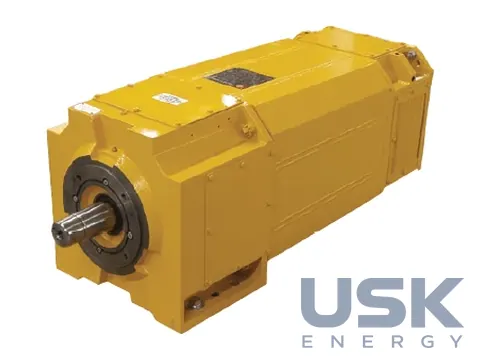 HAW12 / HAW13 / HAW20 / HAW22 / HAW29Drilling induction motors 600–2000 hp, 575 V, for variable-frequency drive
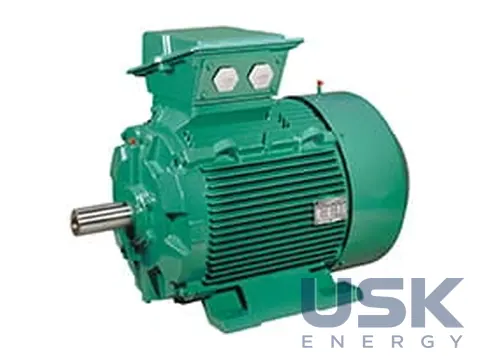 IMfinity FLSESThree-phase LV induction motors in cast-iron frame IE3/IE4, 0.75–900 kW
REQUEST
Need a price, lead time or replacement?
Send us a request and we will confirm the configuration, lead time and delivery terms. We reply by email.