
ELECTRICAL SAFETY EQUIPMENT AND PPE
Resistive coupling element
Country: · Model: Resistive Coupling Element
The resistive coupling element monitors open and short circuits in intrinsically safe isolator amplifier circuits. Precision resistors on the sensor line produce four distinguishable states. The part is certified for installation in hazardous areas.
Technical specifications
Specifications are taken from the manufacturer’s technical documentation. Updated .
Description
The element sits on the sensor line, where a combination of precision resistors sets a distinct signal level for each state. The isolator amplifier tells apart a broken line, an open switch, a closed switch and a short circuit. Without such an element a plain contact cannot be told from a damaged cable, because a cut line and an open switch look the same. The part is compatible with isolator amplifiers and its construction is rated for a stated temperature range. The certification covers work in hazardous areas. For a designer this is a way to build line diagnostics into an ordinary discrete input without a separate monitoring sensor. The element is fitted at the sensor itself, so the resistors sit closer to the point of a break than the amplifier does.
How to choose
The element is needed when the system has to tell a healthy open line from a break. Check that the input of your isolator amplifier supports line monitoring with a four-state scheme. Compare the temperature range and the certificate with the conditions next to the sensor. The signal itself still needs an isolator amplifier to leave the hazardous area.
Request a price and lead time
Resistive coupling element. We reply within one business day.
Or email office@usk.ua or call +38 (044) 339-50-20.
FAQ
Which states does the resistive coupling element detect?
Four states. These are open circuit, open switch, closed switch and short circuit.
Which devices is this element compatible with?
With isolator amplifiers in intrinsically safe circuits. The element is installed on the sensor line.
Why fit resistors on a sensor line?
Without them a line break cannot be told from an open contact. The resistors give each state its own signal level.
Can the element be installed in a hazardous area?
Yes, it is certified for hazardous-area installation and rated for a stated temperature range.
Is a separate sensor needed for line monitoring?
No, monitoring is done by the resistors on the sensor line together with the isolator amplifier. No extra hardware is needed for the monitoring itself.
Similar products
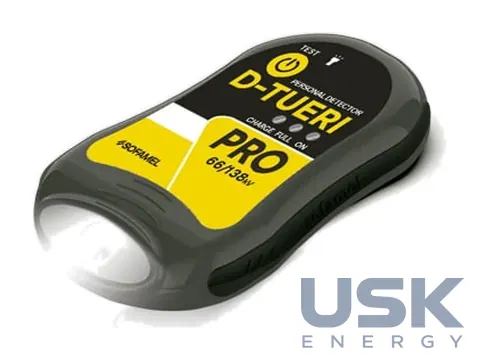 D-TUERI / D-WATCHD-TUERI / D-WATCH personal electric field alarms 1–400 kV
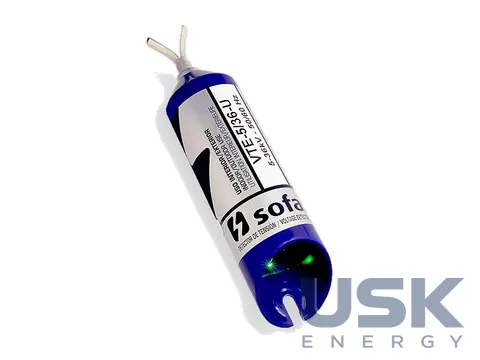 VTE / VTM / POWER LIGHT / VTO / PEKE / VTCVTE / VTM / POWER LIGHT / VTO / PEKE / VTC voltage detectors 1–79 kV AC and 0.5–5 kV DC
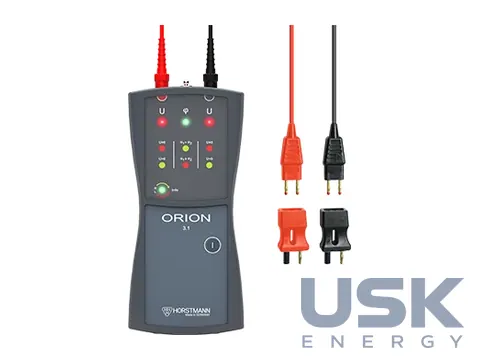 Orion 3.1 / M1 / compact, LRM-ST / HR-STOrion 3.1 / M1 / compact, LRM-ST / HR-ST portable voltage detectors and phase comparators for LRM/HR interfaces
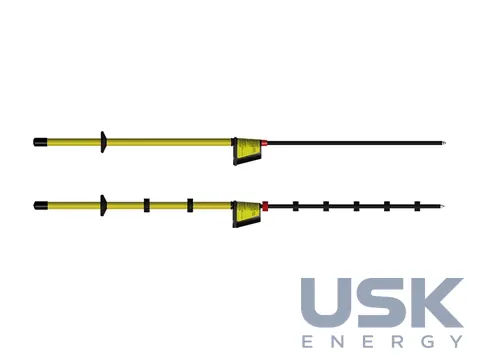 Sirius / Comet / FL-ISirius / Comet / FL-I single-pole voltage detectors 6–30 kV per IEC 61243-1
REQUEST
Need a price, lead time or replacement?
Send us a request and we will confirm the configuration, lead time and delivery terms. We reply by email.