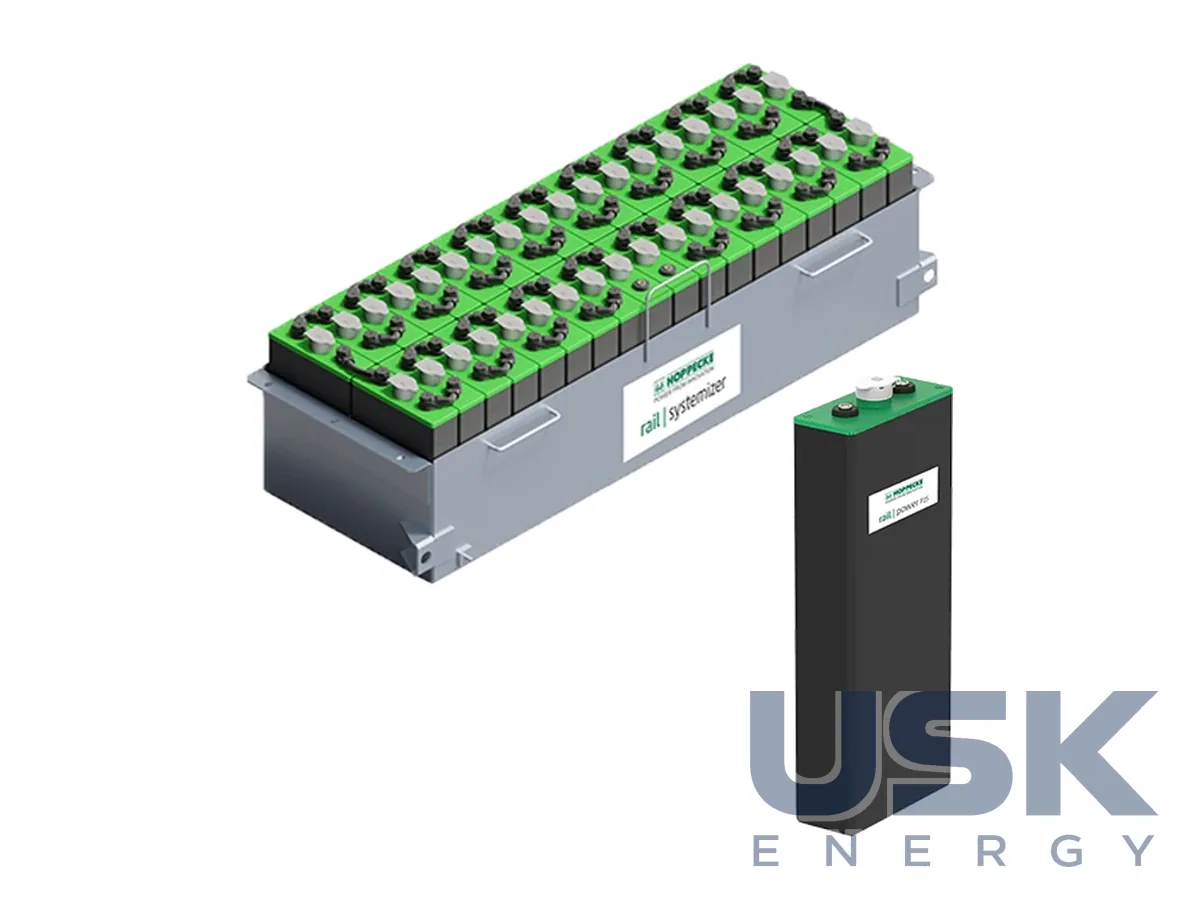
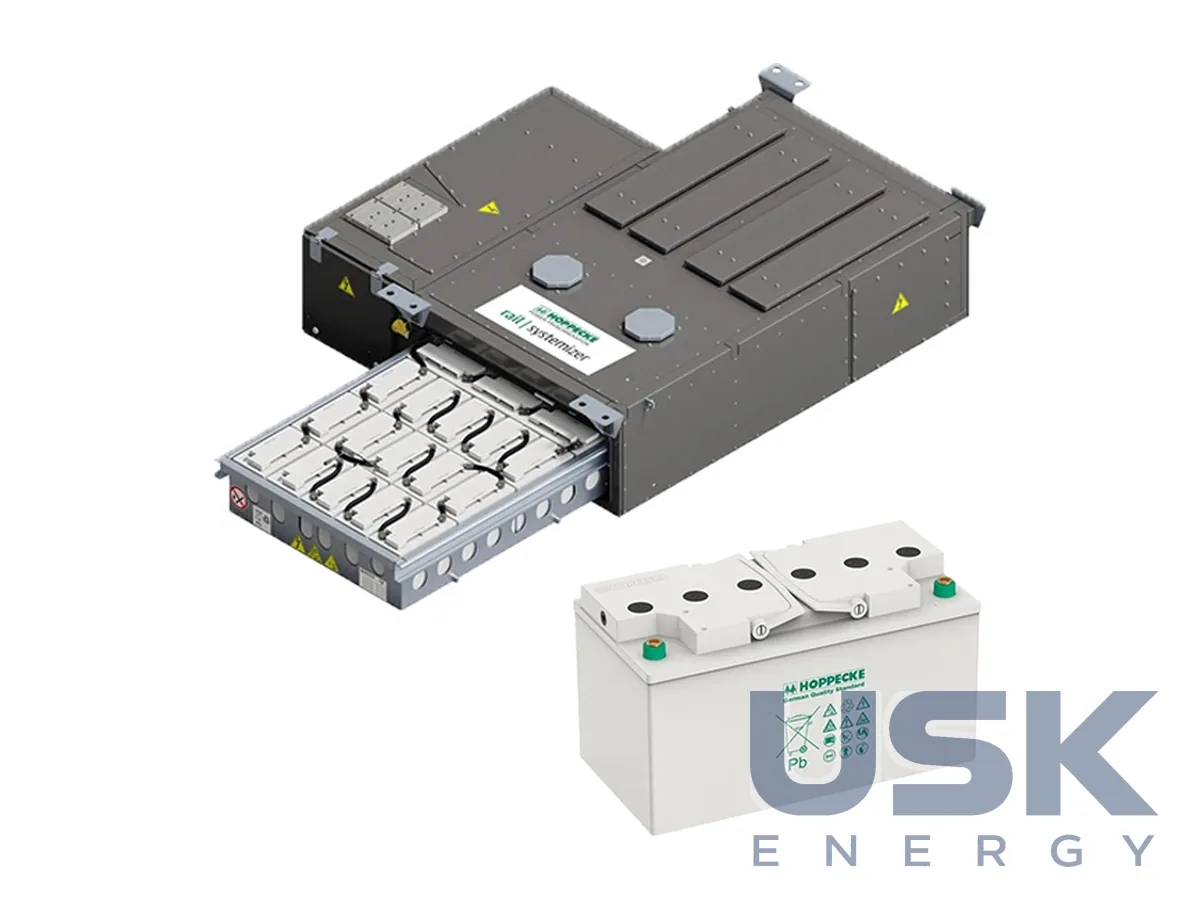
rail | lead-acid — lead-acid batteries for rolling stock
Country: Germany · Model: rail | lead-acid
The rail | lead-acid lead-acid battery systems for on-board power and starting of rolling stock are supplied with flooded 2 V HPzS cells or with sealed VRLA-AGM blocks. They are used in locomotives, regional trains and high-speed trains.
- Design
- flooded 2 V HPzS cells in DIN format; sealed VRLA-AGM
- Application
- on-board power and starting of locomotives, regional and high-speed trains
- Standards
- DIN EN 60896, DIN EN 50547
Technical specifications
| Design | flooded 2 V HPzS cells in DIN format; sealed VRLA-AGM |
|---|---|
| Application | on-board power and starting of locomotives, regional and high-speed trains |
| Standards | DIN EN 60896, DIN EN 50547 |
Specifications are taken from the manufacturer’s technical documentation. Updated .
Description
The flooded HPzS cells are made in DIN format and assembled in battery boxes under the car body or in the locomotive's machine compartment. An automatic water topping-up system is provided for them, which shortens maintenance time in the depot. The sealed VRLA-AGM version needs no topping up and is more convenient where access to the battery is limited. The battery powers lighting, control and communication when the overhead line is switched off and starts the locomotive's diesel engine. The DIN EN 50547 standard applies to batteries for on-board power of railway vehicles, while DIN EN 60896 describes the requirements for lead-acid batteries.
How to choose
The choice between flooded HPzS and VRLA-AGM depends on the maintenance regime in the depot. Flooded cells with automatic topping-up are easier to diagnose by electrolyte density, while AGM needs no water. If resistance to extreme temperatures and vibration is required, consider the nickel-cadmium rail | Nickel-Cadmium, and for new trains with strict weight requirements the lithium-ion rail | lithium. The capacity is calculated from the duration of emergency power and the diesel starting current.
Request a price and lead time
rail | lead-acid — lead-acid batteries for rolling stock. We reply within one business day.
Or email office@usk.ua or call +38 (044) 339-50-20.
FAQ
Which types of lead-acid batteries are in the rail | lead-acid series?
Flooded 2 V HPzS cells in DIN format and sealed VRLA-AGM. Both versions conform to DIN EN 50547.
What is the purpose of the rail | lead-acid batteries on rolling stock?
On-board power and starting of locomotives, regional and high-speed trains, when the overhead line is switched off or the diesel has not yet been started.
Is there automatic water topping-up for railway HPzS batteries?
Yes, the flooded 2 V cells can be equipped with an automatic topping-up system, which fills all the jars in one operation during maintenance.
Which standards do the rail | lead-acid batteries conform to?
DIN EN 60896 for lead-acid batteries and DIN EN 50547 for batteries for on-board power of railway vehicles.
Similar products
REQUEST
Need a price, lead time or replacement?
Send us a request and we will confirm the configuration, lead time and delivery terms. We reply by email.