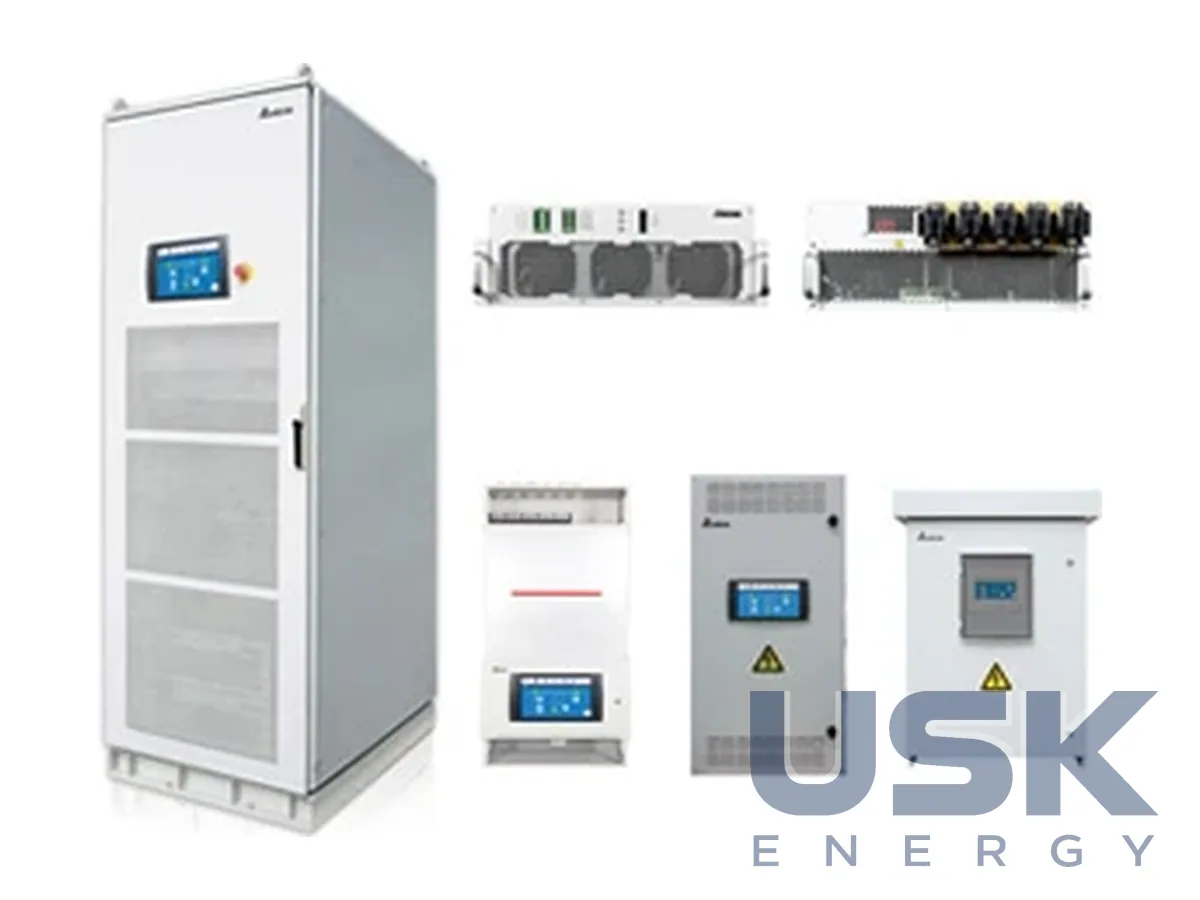
PQC SVG — static var generator
Country: Taiwan · Model: PQC SVG
The PQC SVG compensates reactive power with 50 and 100 kvar modules in 380–400 V networks and brings the power factor to cos φ ≥ 0.99. This static var generator regulates output quickly and smoothly, without steps, and also balances the phase load. It is appropriate where the reactive load changes often and a capacitor bank cannot keep up.
- Module power
- 50 / 100 kvar
- Voltage
- 380–400 V
- Compensation
- inductive and capacitive reactive power, unbalance
- cos φ after compensation
- ≥ 0.99
Technical specifications
| Module power | 50 / 100 kvar |
|---|---|
| Voltage | 380–400 V |
| Compensation | inductive and capacitive reactive power, unbalance |
| cos φ after compensation | ≥ 0.99 |
| Versions | modules, cabinets, wall-mounted; IP30 / IP42 / IP54 |
Specifications are taken from the manufacturer’s technical documentation. Updated .
Description
Unlike a stepped capacitor bank, the generator delivers reactive power smoothly, without contactor switching and without overcompensation at small loads. It works with both inductive and capacitive components, so it suits sites where, in hours of low load, the network becomes capacitive because of long cable lines. Separately, the generator evens out phase currents under the unbalance created by single-phase consumers. Power is built up from 50 or 100 kvar modules, which are mounted in the customer's cabinet, in a ready cabinet or in a wall-mounted housing. The enclosure protection rating IP30, IP42 or IP54 is chosen by installation location. Fast response is noticeable on cranes, presses and welding stations, where reactive power jumps within seconds.
How to choose
The required generator power is calculated as the difference between the reactive power of the load and what will remain at cos φ 0.99, rounded up to a multiple of 50 or 100 kvar. The generator is designed for 380–400 V networks. When the network has, besides the reactive component, many harmonics from frequency converters and rectifiers, it is more sensible to take the active filter PQC APF at 50–525 A, which compensates both harmonics and reactive power.
Request a price and lead time
PQC SVG — static var generator. We reply within one business day.
Or email office@usk.ua or call +38 (044) 339-50-20.
FAQ
What power ratings do PQC SVG modules come in?
Modules are made for 50 and 100 kvar. They are combined in a cabinet to reach the reactive power needed for a specific supply entry.
To what cos φ value does the PQC SVG compensate the network?
After compensation the power factor is at least 0.99. The generator holds this value even when the load changes quickly, since it regulates power smoothly.
How does a static var generator differ from a capacitor bank?
It regulates reactive power smoothly rather than in steps, and compensates both inductive and capacitive components. A capacitor bank is switched by contactors and compensates only inductive load.
Does the PQC SVG even out phase load unbalance?
Yes, besides compensating reactive power the generator balances the load. This is useful in 380–400 V networks with a large share of single-phase consumers.
Can the PQC SVG be used in a 690 V network?
No, the generator is designed for 380–400 V. For 690 V networks this range has the active filter PQC APF, which also compensates reactive power and unbalance.
Similar products
REQUEST
Need a price, lead time or replacement?
Send us a request and we will confirm the configuration, lead time and delivery terms. We reply by email.