DC-DC CONVERTERS AND BATTERY CHARGERS
VTF output dV/dt filters 4–300 A
Country: Italy · Model: VTF
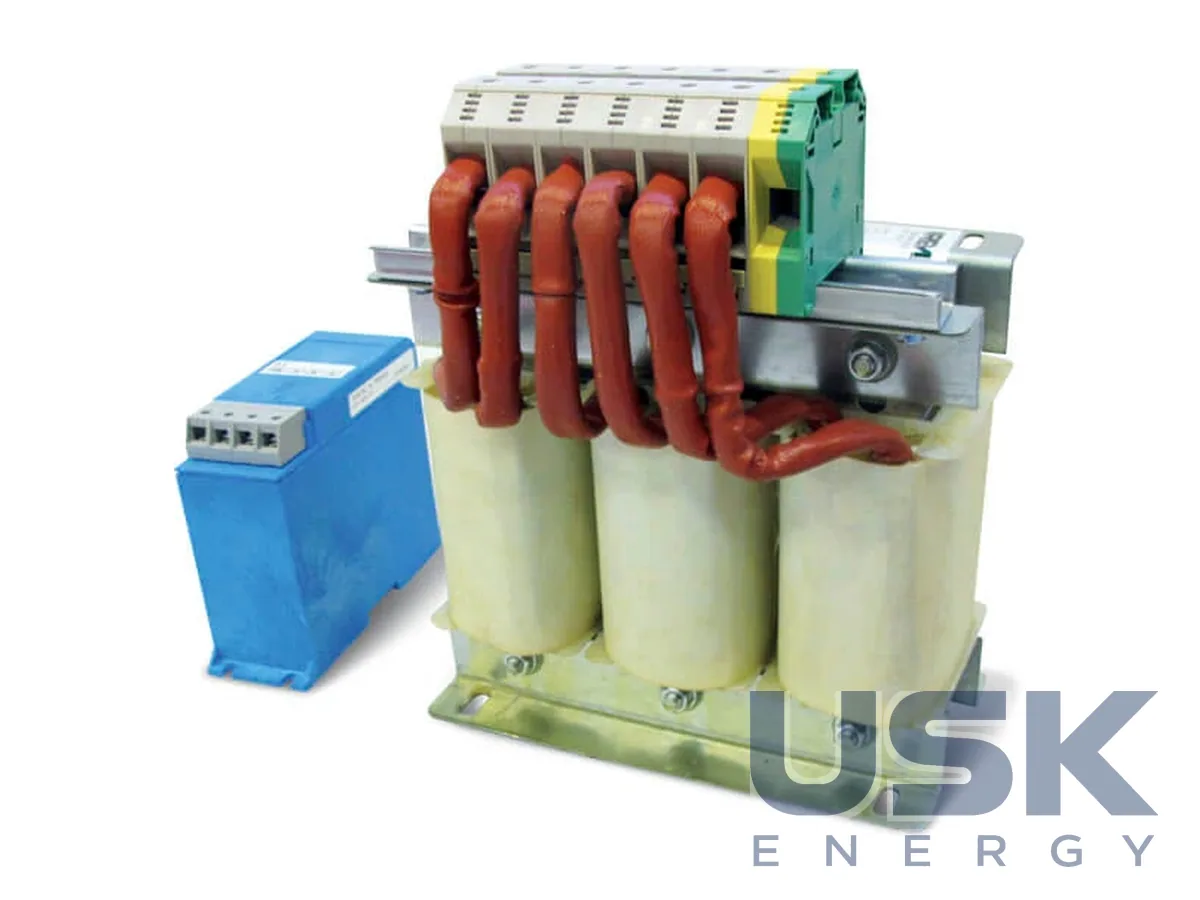
VTF output dV/dt filters for 4–300 A sit between a frequency converter and the motor. They are built for 208–480 V, with an HV version for 550–690 V. The filter softens voltage spikes on the windings and extends the life of motor insulation.
- Voltage
- 208–480 V; 550–690 V (HV)
- Current
- 4–300 A
- Carrier frequency
- 0–16 kHz
- Output frequency
- 0–100 Hz
Technical specifications
| Voltage | 208–480 V; 550–690 V (HV) |
|---|---|
| Current | 4–300 A |
| Carrier frequency | 0–16 kHz |
| Output frequency | 0–100 Hz |
| Degree of protection | IP00, IP21, IP54 |
Specifications are taken from the manufacturer’s technical documentation. Updated .
Description
A dV/dt filter is connected to the converter output to soften the steep PWM pulse edges and keep voltage peaks off the motor winding. The converter carrier frequency can range from 0 to 16 kHz, and the output frequency from 0 to 100 Hz. The standard version covers 208–480 V, while 550–690 V calls for the HV version. Protection degree follows the place of installation, with IP00 for mounting inside a cabinet and IP21 or IP54 for standalone placement.
How to choose
Choose the filter current from the rated current of the converter, since the 4–300 A range spans small drives up to heavy ones. The second criterion is mains voltage. Take the standard version for 208–480 V and the HV version for 550–690 V. If the motor needs a near-sinusoidal voltage, or the current is above 300 A, look at the SWF sine filters for 2–1000 A with a PWM frequency above 2 kHz. Mains harmonics are handled by LIF line reactors for 2–1000 A.
Request a price and lead time
VTF output dV/dt filters 4–300 A. We reply within one business day.
Or email office@usk.ua or call +38 (044) 339-50-20.
FAQ
Why is a dV/dt filter needed at the output of a frequency converter?
It softens the steep pulse edges and cuts voltage peaks on the motor windings. As a result the insulation wears more slowly and the motor lasts longer.
What current are VTF filters rated for?
The series covers currents of 4–300 A. The filter is taken by the rated current of the converter, so each drive gets its own size.
What voltage and frequencies does the VTF filter accept?
The standard version is for 208–480 V mains and the HV version for 550–690 V. The carrier frequency lies within 0–16 kHz and the output frequency is 0–100 Hz.
Which protection degrees does VTF have?
IP00, IP21 and IP54 are available. IP00 goes inside a cabinet, while IP21 or IP54 is chosen when the filter stands separately in a workshop or on site.
How does VTF differ from the SWF sine filter?
VTF limits the rate of voltage rise at the converter output. The SWF sine filter for 2–1000 A shapes a smooth voltage waveform, so it is taken when the motor needs a near-sinusoid.
Similar products
REQUEST
Need a price, lead time or replacement?
Send us a request and we will confirm the configuration, lead time and delivery terms. We reply by email.