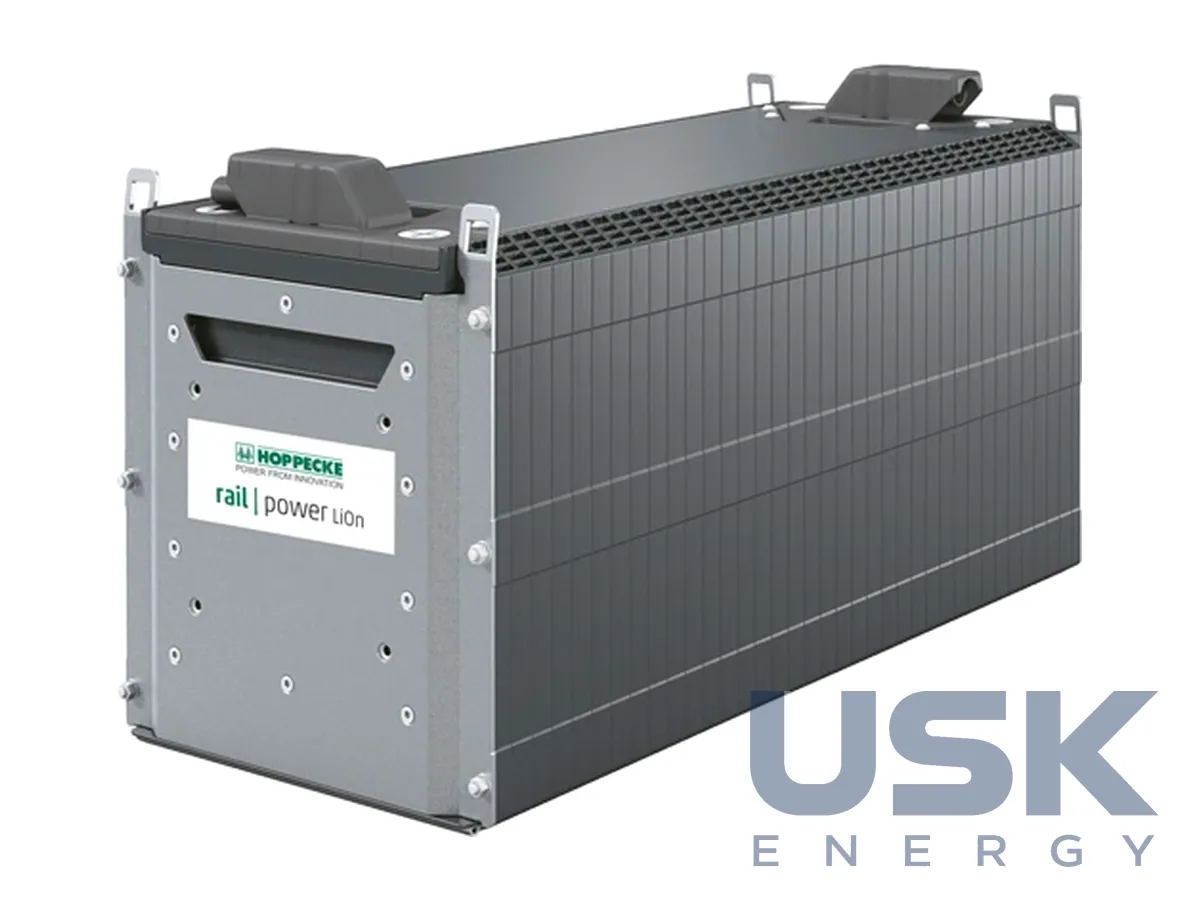
rail | lithium (LiAux, LiTrac) — lithium-ion battery systems for rolling stock
Country: Germany · Model: rail | lithium LiAux, LiTrac
The modular rail | lithium lithium-ion systems for trains and public transport come in two lines, LiAux for auxiliary power and LiTrac for traction. The functional safety level is SIL 2 to EN 50129 and EN 50657, with compliance to IEC 62928.
- Application
- LiAux — auxiliary power, LiTrac — traction systems
- Chemistry
- lithium-ion (LFP on the page, NMC and LTO in the datasheet)
- Safety
- SIL 2 (EN 50129, EN 50657)
- Standards
- IEC 62928
Technical specifications
| Application | LiAux — auxiliary power, LiTrac — traction systems |
|---|---|
| Chemistry | lithium-ion (LFP on the page, NMC and LTO in the datasheet) |
| Safety | SIL 2 (EN 50129, EN 50657) |
| Standards | IEC 62928 |
| Features | modular scaling of voltage and energy, hybrid cooling |
Specifications are taken from the manufacturer’s technical documentation. Updated .
Description
The system is designed for the customer's load profile, scaling voltage and energy with a set of modules. Cooling is hybrid, which helps keep the cell temperature within operating limits during intensive traction. The sources differ on chemistry: the manufacturer's page states lithium iron phosphate LFP, while the datasheet mentions NMC and LTO, so the cell type is clarified for each project. LTO withstands very high charging currents, LFP is more resistant to overheating, and NMC has a higher specific energy. IEC 62928 applies to lithium-ion traction batteries for railways, while EN 50129 and EN 50657 describe the safety requirements for equipment and software.
How to choose
First determine the task. LiAux replaces lead-acid or NiCd on-board auxiliary power batteries, while LiTrac works as a traction source for hybrid and battery trains. For LiTrac, the decisive factors are the energy for a run without overhead line and the peak current, and for LiAux the duration of emergency power. If the depot is not ready for lithium infrastructure, consider rail | lead-acid or rail | Nickel-Cadmium.
Request a price and lead time
rail | lithium (LiAux, LiTrac) — lithium-ion battery systems for rolling stock. We reply within one business day.
Or email office@usk.ua or call +38 (044) 339-50-20.
FAQ
What chemistry do the rail | lithium batteries use?
Lithium-ion. The manufacturer's page states LFP, while the datasheet mentions NMC and LTO, so the cell type is agreed for the project.
What safety level do the LiAux and LiTrac systems have?
SIL 2 to EN 50129 and EN 50657, and the battery itself complies with IEC 62928.
How does LiAux differ from LiTrac?
LiAux powers the train's auxiliary systems, while LiTrac works as a traction battery. Both are built from modules with scaling of voltage and energy and have SIL 2 level.
How is the LiTrac traction battery cooled?
Hybrid cooling is used, and its parameters are selected for the load profile of the specific train. The battery complies with IEC 62928.
Can rail | lithium be installed in a bus or tram?
The manufacturer names trains and public transport, and the system is designed for the customer's load profile with safety level SIL 2.
Similar products
REQUEST
Need a price, lead time or replacement?
Send us a request and we will confirm the configuration, lead time and delivery terms. We reply by email.