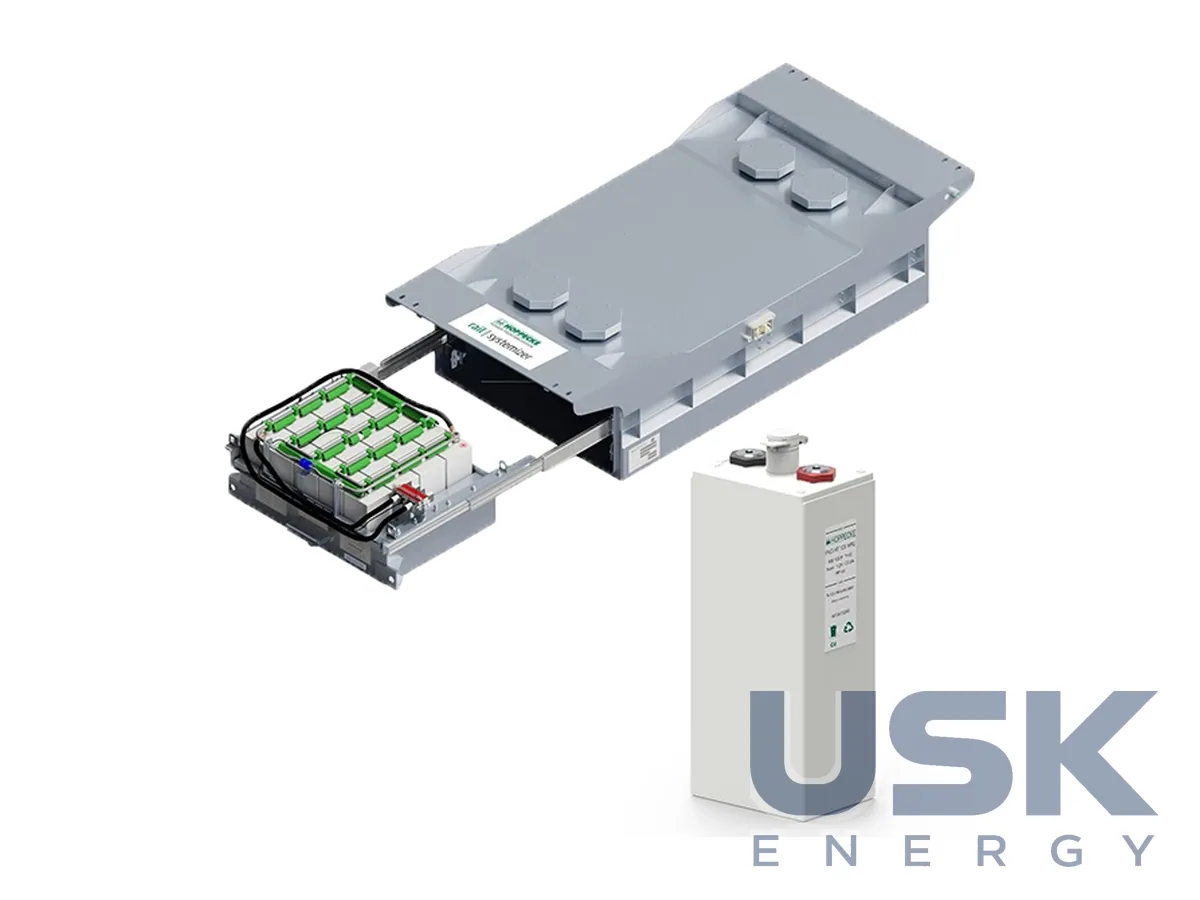
rail | Nickel-Cadmium (FNC, HNCS) — NiCd batteries for rail transport
Country: Germany · Model: rail | Nickel-Cadmium FNC, HNCS
The rail | Nickel-Cadmium nickel-cadmium batteries with a service life of up to 3000 cycles and about 15 years work as emergency and starting sources on rolling stock. They are designed for extreme temperatures and vibration.
- Technology
- NiCd: fibre FNC and sintered/PBE HNCS
- Cycle life
- up to 3000 cycles
- Service life
- about 15 years
- Standards
- IEC 60623, IEC 61373, DIN EN 50547
Technical specifications
| Technology | NiCd: fibre FNC and sintered/PBE HNCS |
|---|---|
| Cycle life | up to 3000 cycles |
| Service life | about 15 years |
| Standards | IEC 60623, IEC 61373, DIN EN 50547 |
Specifications are taken from the manufacturer’s technical documentation. Updated .
Description
The series has two electrode types. FNC have a fibre base, while HNCS are made with sintered technology or PBE and are designed for high power, including emergency running of a train. Nickel-cadmium chemistry is less sensitive to deep discharge and frost than lead-acid, so it is chosen for cars standing on open tracks. Resistance to vibration and shock is verified to IEC 61373, which is important for batteries mounted under the car body. IEC 60623 describes vented nickel-cadmium prismatic cells, and DIN EN 50547 applies to batteries for on-board railway power.
How to choose
FNC suits typical on-board power and starting, while HNCS is chosen when high power is needed, for example for emergency running of a train to the nearest station. If the operator wants to reduce weight and stop topping up with water, compare with the lithium-ion rail | lithium. For a depot with the usual lead-acid battery infrastructure, the option rail | lead-acid with flooded HPzS cells or AGM remains. The calculation is based on the required duration of emergency power and the starting current.
Request a price and lead time
rail | Nickel-Cadmium (FNC, HNCS) — NiCd batteries for rail transport. We reply within one business day.
Or email office@usk.ua or call +38 (044) 339-50-20.
FAQ
How many cycles does the rail | Nickel-Cadmium NiCd battery withstand?
Up to 3000 cycles, and the service life is about 15 years depending on temperature and charging mode.
How do FNC and HNCS batteries differ?
FNC have fibre electrodes, while HNCS are made with sintered technology or PBE for high power, including emergency running. Both types conform to IEC 60623.
Do NiCd batteries withstand the vibration of rolling stock?
Yes, resistance to shock and vibration is verified to IEC 61373 for railway equipment.
Why are nickel-cadmium batteries still used on railways?
They work at extreme temperatures and vibration, withstand up to 3000 cycles and last about 15 years.
Similar products
REQUEST
Need a price, lead time or replacement?
Send us a request and we will confirm the configuration, lead time and delivery terms. We reply by email.