BESafe dual-channel H2, CO and CH4 gas detector for energy storage systems (BESS) and battery rooms
Country: United Kingdom · Model: BESafe
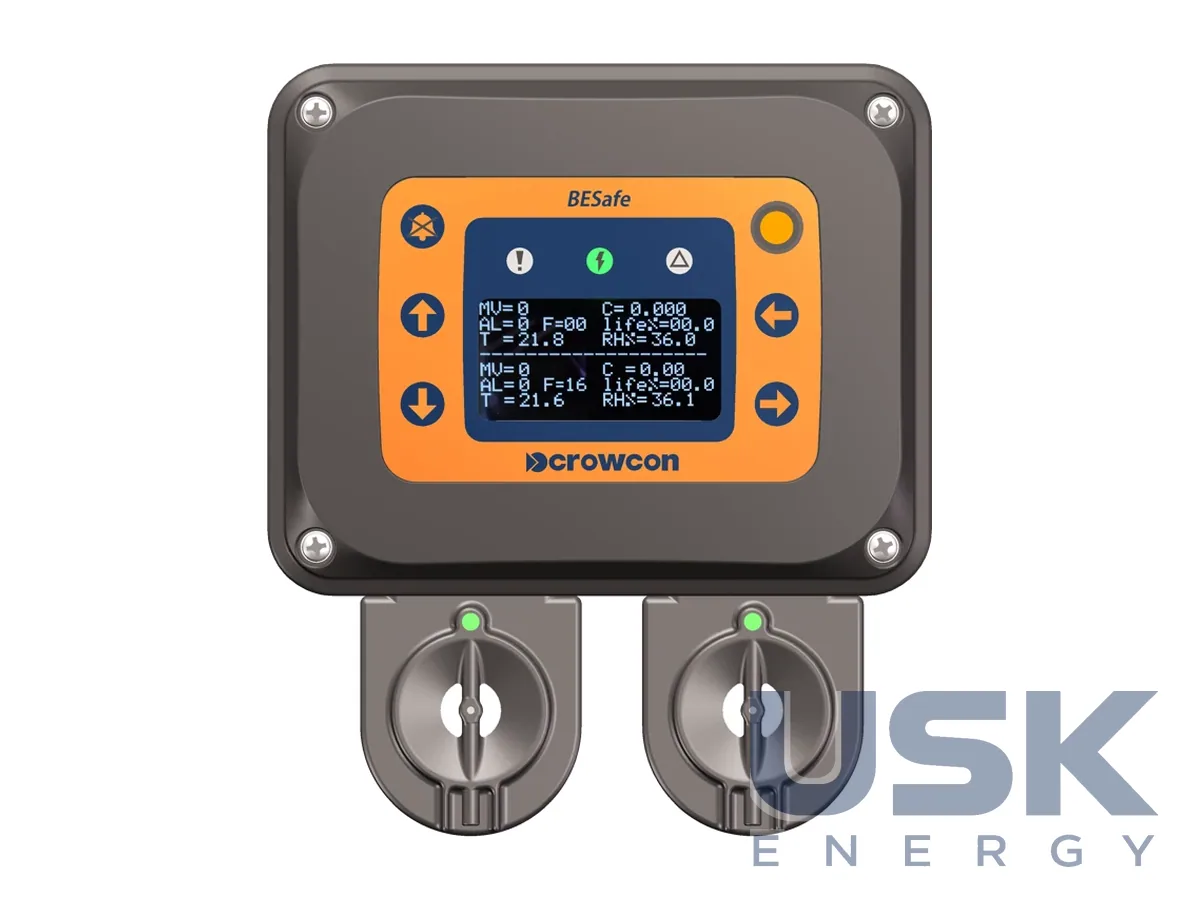
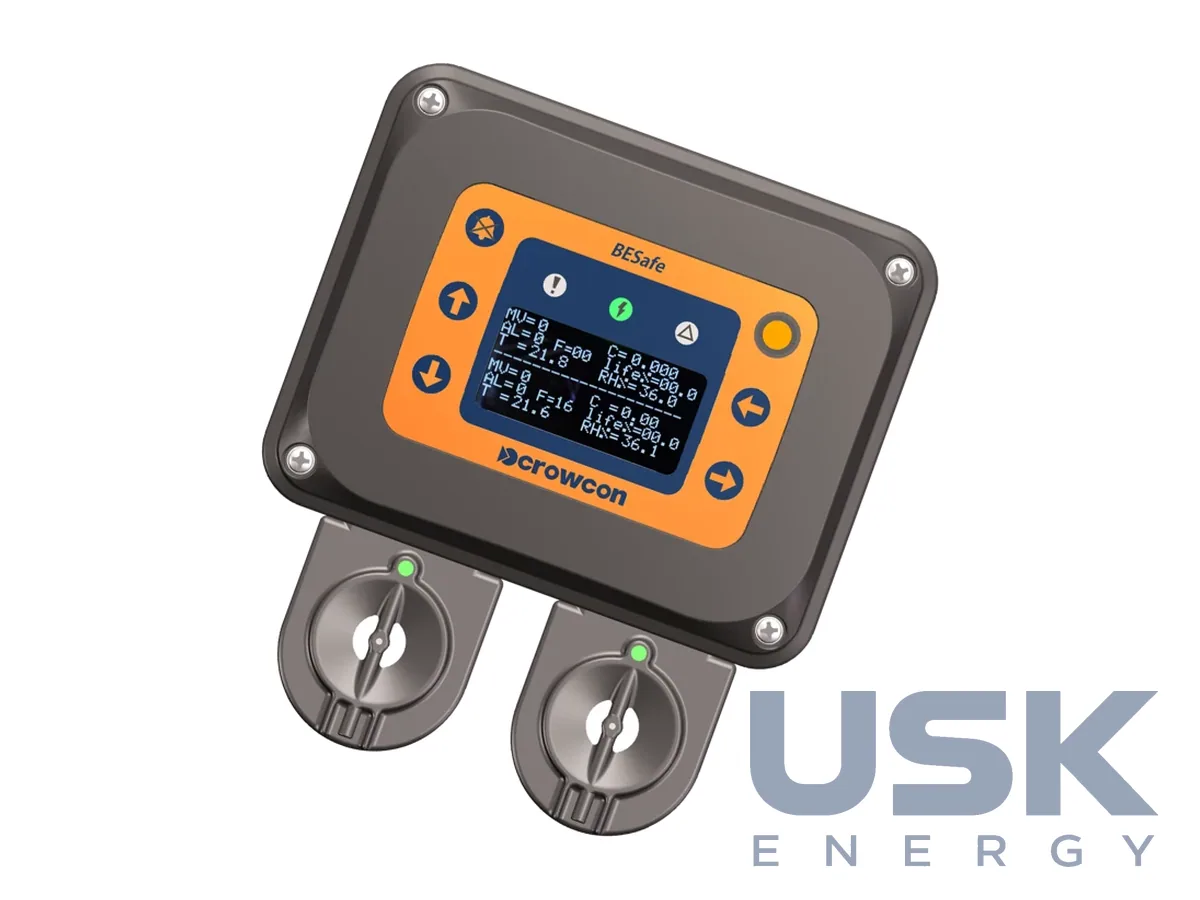
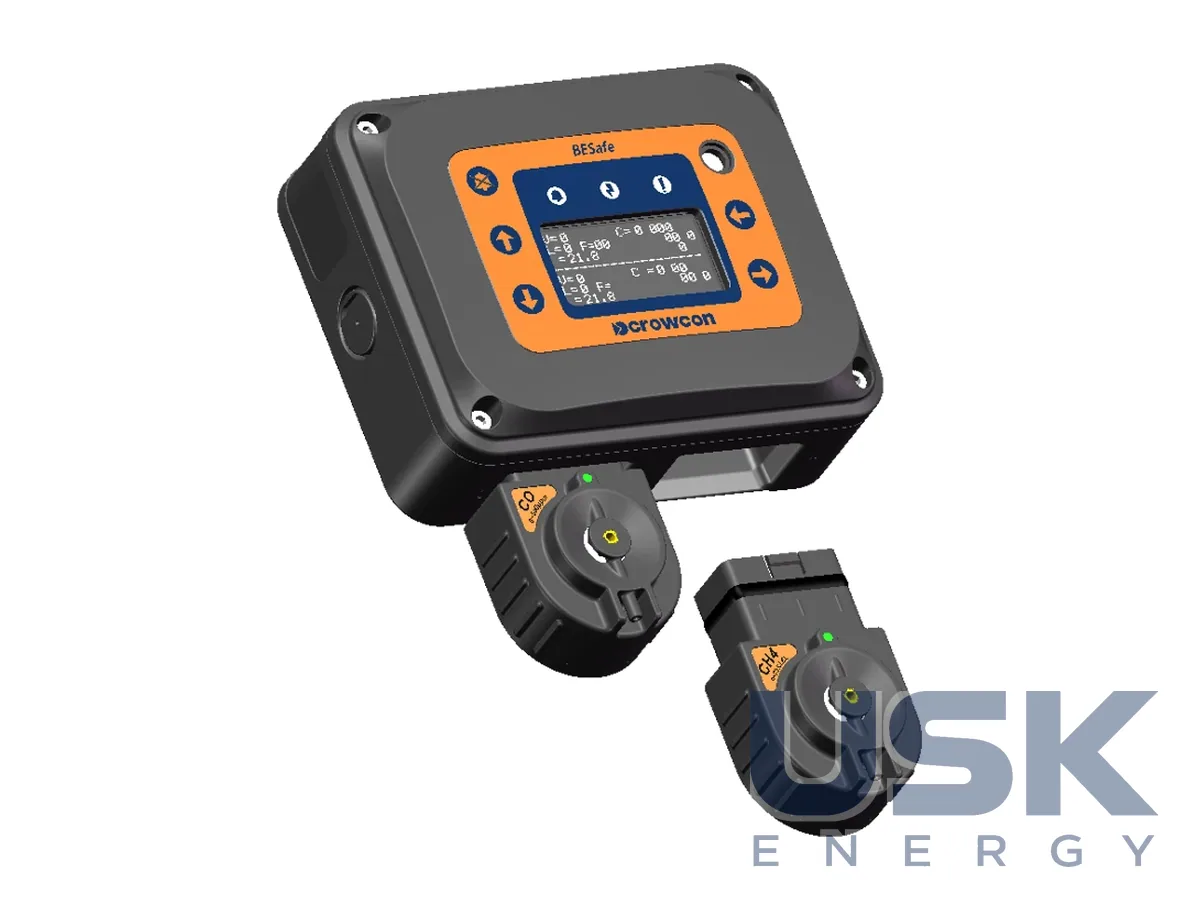
The BESafe dual-channel gas detector for energy storage systems (BESS) and battery rooms monitors two gases at once from the list of H2, CO and CH4. The 175×150×55 mm transmitter is installed in a BESS container or in the battery room of a substation, data centre or telecom node.
- Gases
- hydrogen (H2), carbon monoxide (CO), methane (CH4); 2 channels at once
- Purpose
- early detection of thermal runaway in Li-ion batteries
- Design
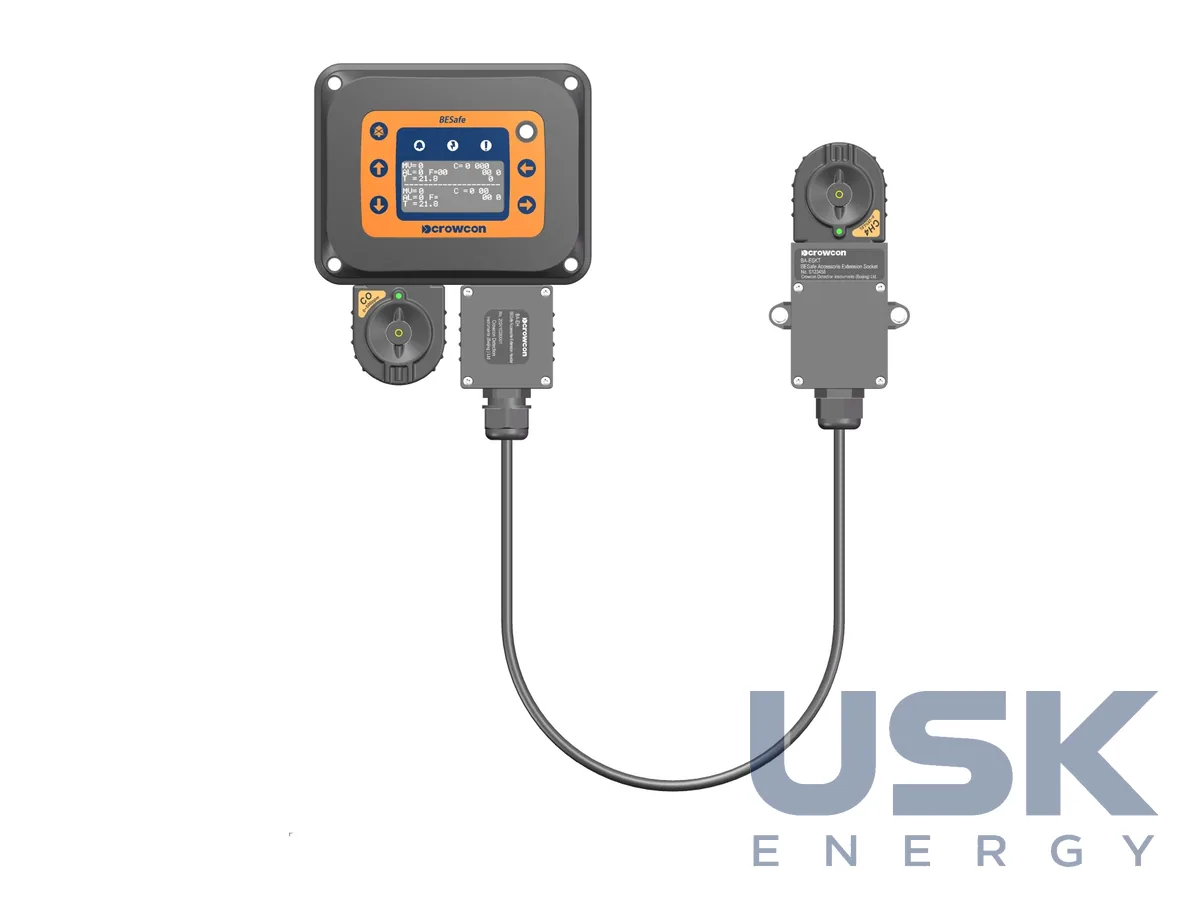
- transmitter with remote smart sensors
- Dimensions / weight
- 175×150×55 mm (transmitter), sensor depth 33.5 mm; base 550 g, adapter 169 g, sensor module 65 g
Technical specifications
| Gases | hydrogen (H2), carbon monoxide (CO), methane (CH4); 2 channels at once |
|---|---|
| Purpose | early detection of thermal runaway in Li-ion batteries |
| Design | transmitter with remote smart sensors |
| Dimensions / weight | 175×150×55 mm (transmitter), sensor depth 33.5 mm; base 550 g, adapter 169 g, sensor module 65 g |
| Housing | polycarbonate, IP65; M20 entry |
| Power supply | 10–30 V DC (24 V nom.), 150 mA (3.6 W), max. 5 W |
| Display | OLED 128×64, both channels |
| Outputs | 2 × 4–20 mA, RS-485 Modbus RTU; SPDT relays 1 A 24 V DC (Alarm 1, Alarm 2, Fault) |
| Alarm | 85 dB siren at 3 m; power, fault and alarm LEDs |
Specifications are taken from the manufacturer’s technical documentation. Updated .
Description
Hydrogen and carbon monoxide are released during degradation and abnormal gas release of Li-ion batteries, so an early signal records the start of thermal runaway and gives staff and the control system time to shut down, ventilate or extinguish before a fire or explosion. The smart sensors are remote: the 33.5 mm deep module is placed at the monitoring point and the transmitter in an accessible place, which simplifies installation and lowers maintenance cost. The base weighs 550 g, the adapter 169 g and the sensor module 65 g. The polycarbonate housing has IP65 protection and an M20 cable entry with a knock-out plug for a cable with an outer diameter of 6 mm. The local alarm is given by an 85 dB siren at 3 m and by power (green), fault (yellow) and alarm (red) LEDs.
How to choose
The main question is whether the project requires an explosion-proof design. BESafe costs less at the start than industrial explosion-proof detectors and is made for BESS containers and battery rooms, where its channels are set up for the specific application. For methane in hazardous zones 1 and 2 there is the IRmax IR detector in a 316 stainless steel housing with IP66 protection.
Request a price and lead time
BESafe dual-channel H2, CO and CH4 gas detector for energy storage systems (BESS) and battery rooms. We reply within one business day.
Or email office@usk.ua or call +38 (044) 339-50-20.
FAQ
How is BESafe connected to the BESS control system?
Through two 4–20 mA analogue outputs or digital RS-485 Modbus RTU. The SPDT relays rated 1 A at 24 V DC, Alarm 1, Alarm 2 and Fault, are wired into signal circuits or the gas monitoring controller.
What are the power supply and consumption of BESafe?
Voltage is 10–30 V DC, nominally 24 V, current 150 mA, i.e. 3.6 W, maximum 5 W. The inrush current of under 1.7 A is taken into account when choosing the power supply.
Which gas pairs can be set up on BESafe?
Two channels work at the same time from three gases: hydrogen (H2), carbon monoxide (CO) and methane (CH4). For a BESS container or a substation battery room, for example, hydrogen and CO are chosen.
What does the BESafe display show?
The 128×64 pixel OLED display shows the readings of both channels at the same time, so there is no need to switch between gases.
Similar products
REQUEST
Need a price, lead time or replacement?
Send us a request and we will confirm the configuration, lead time and delivery terms. We reply by email.