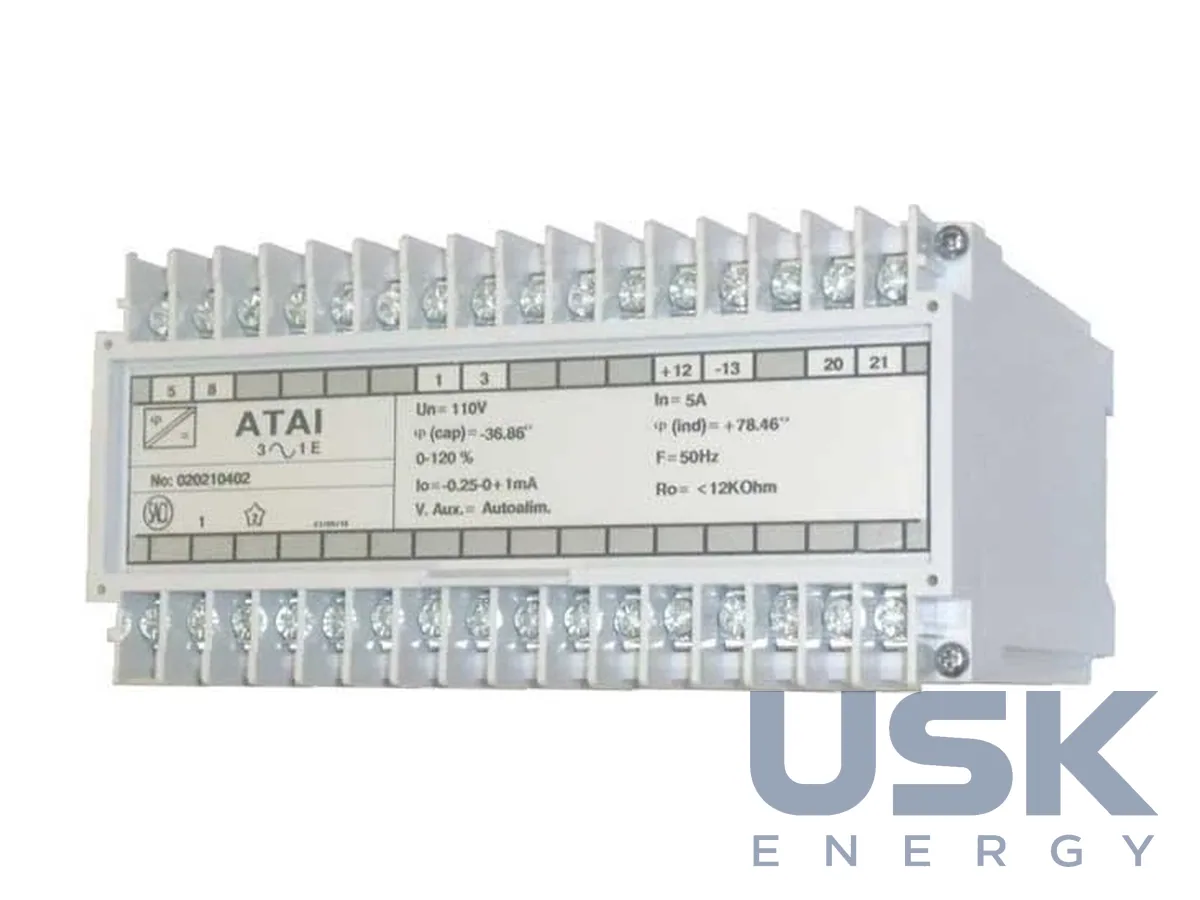
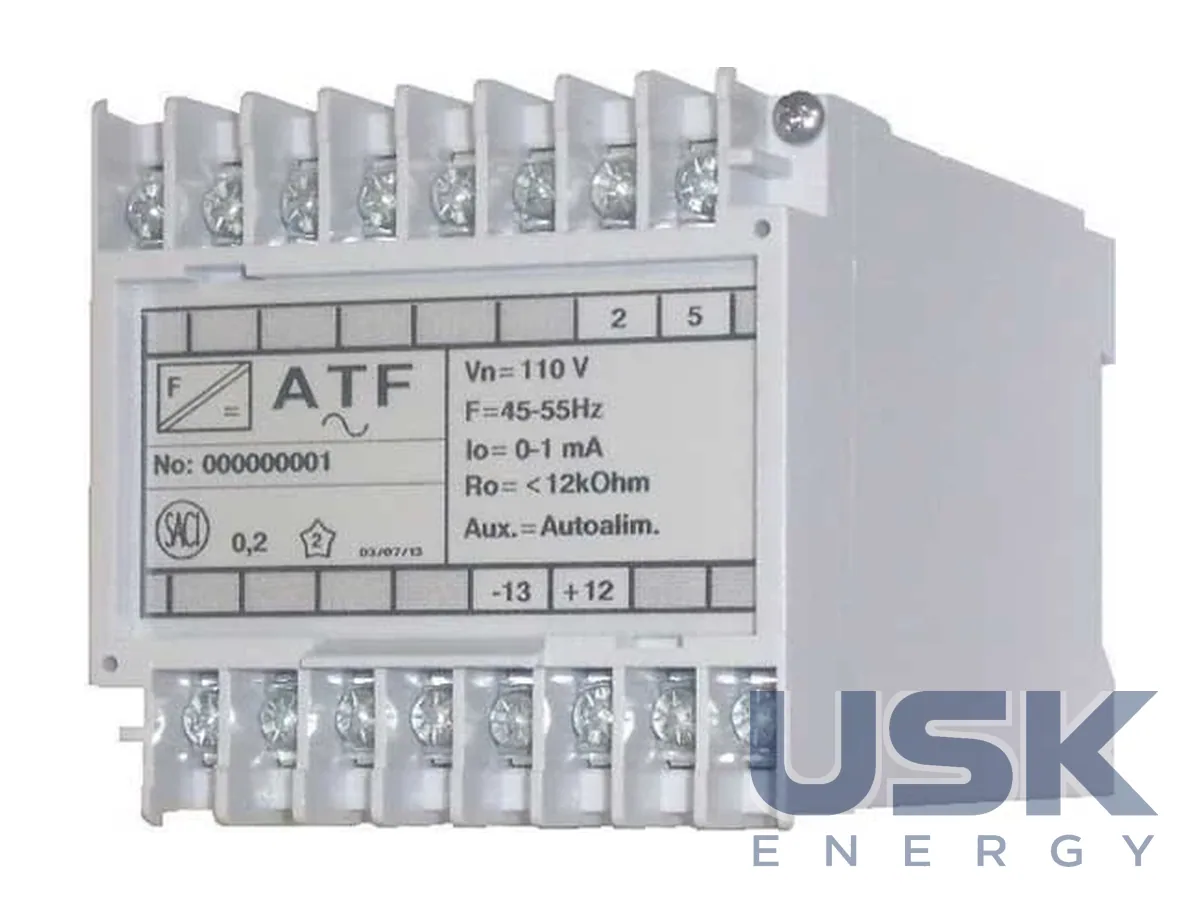
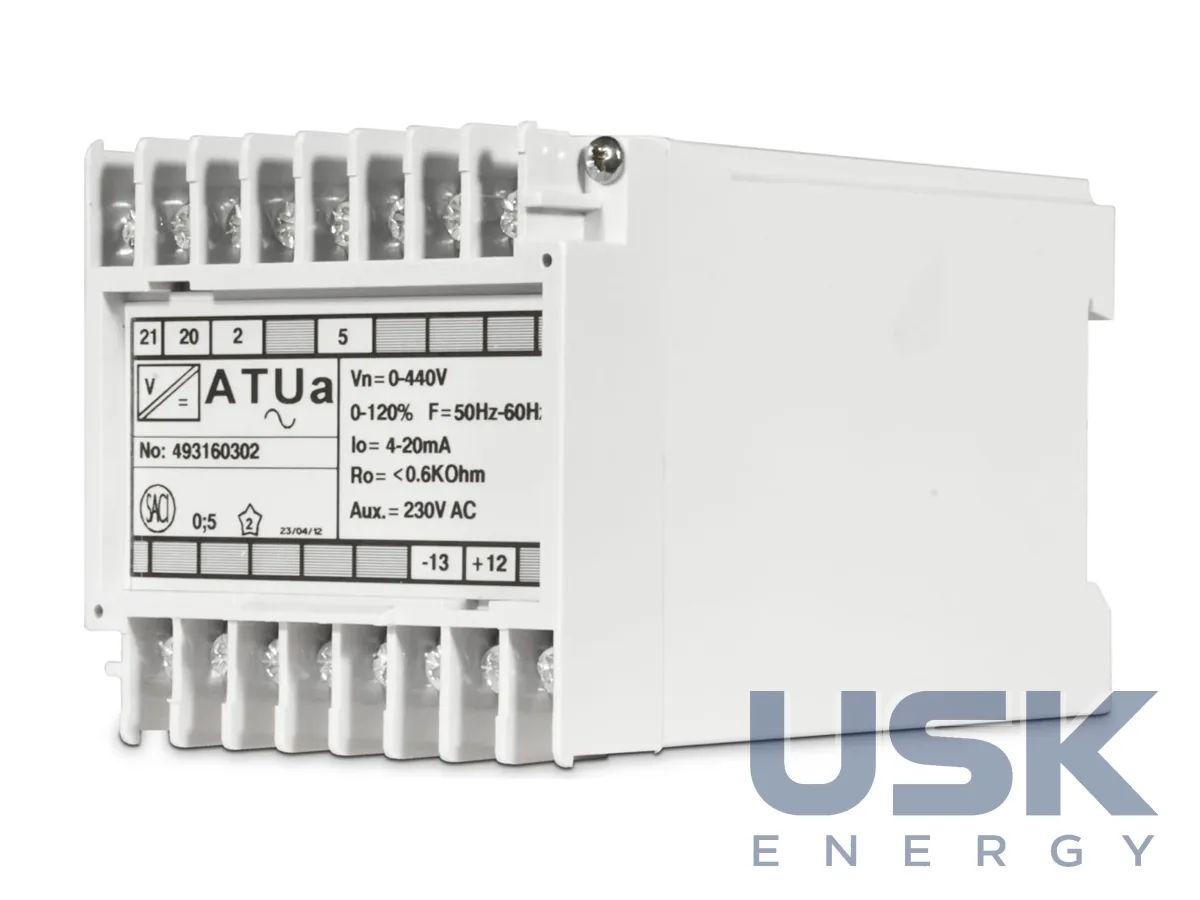
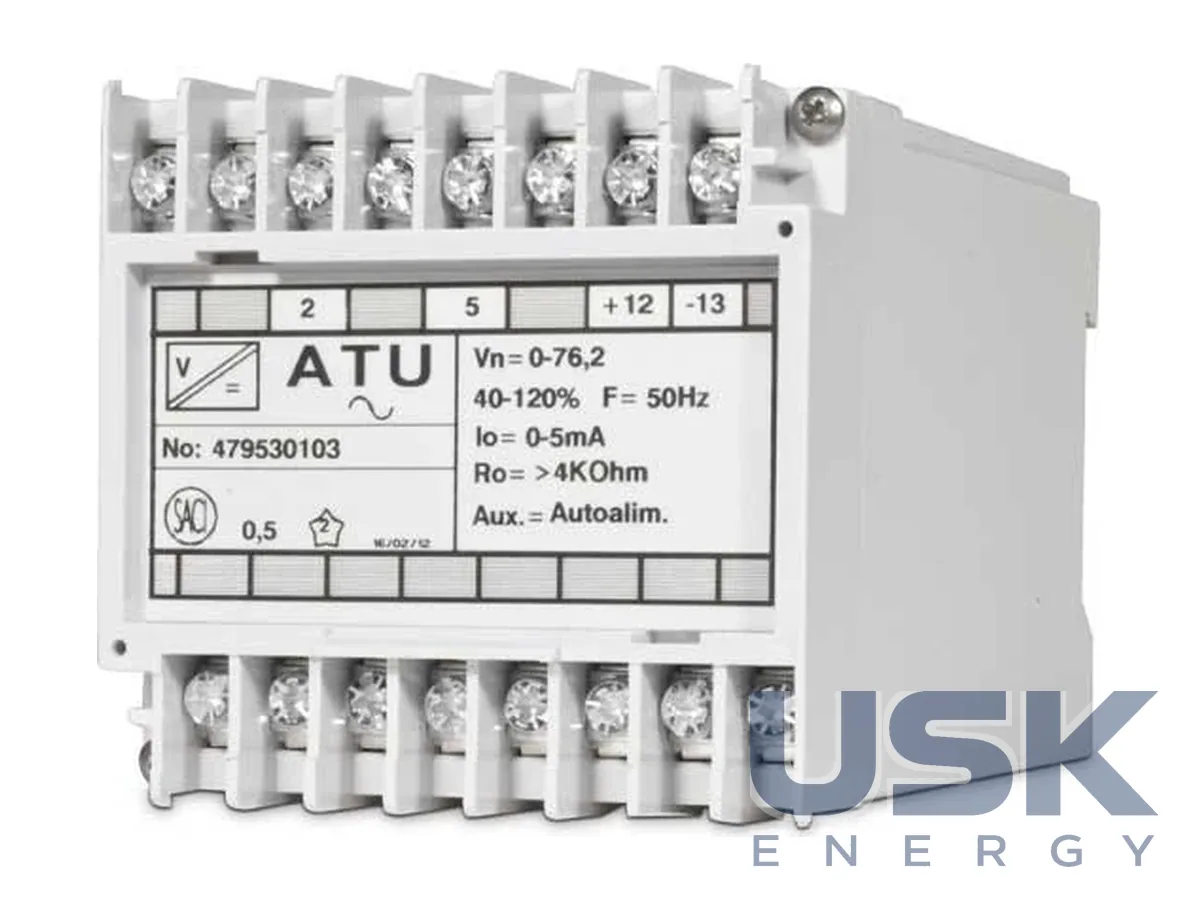
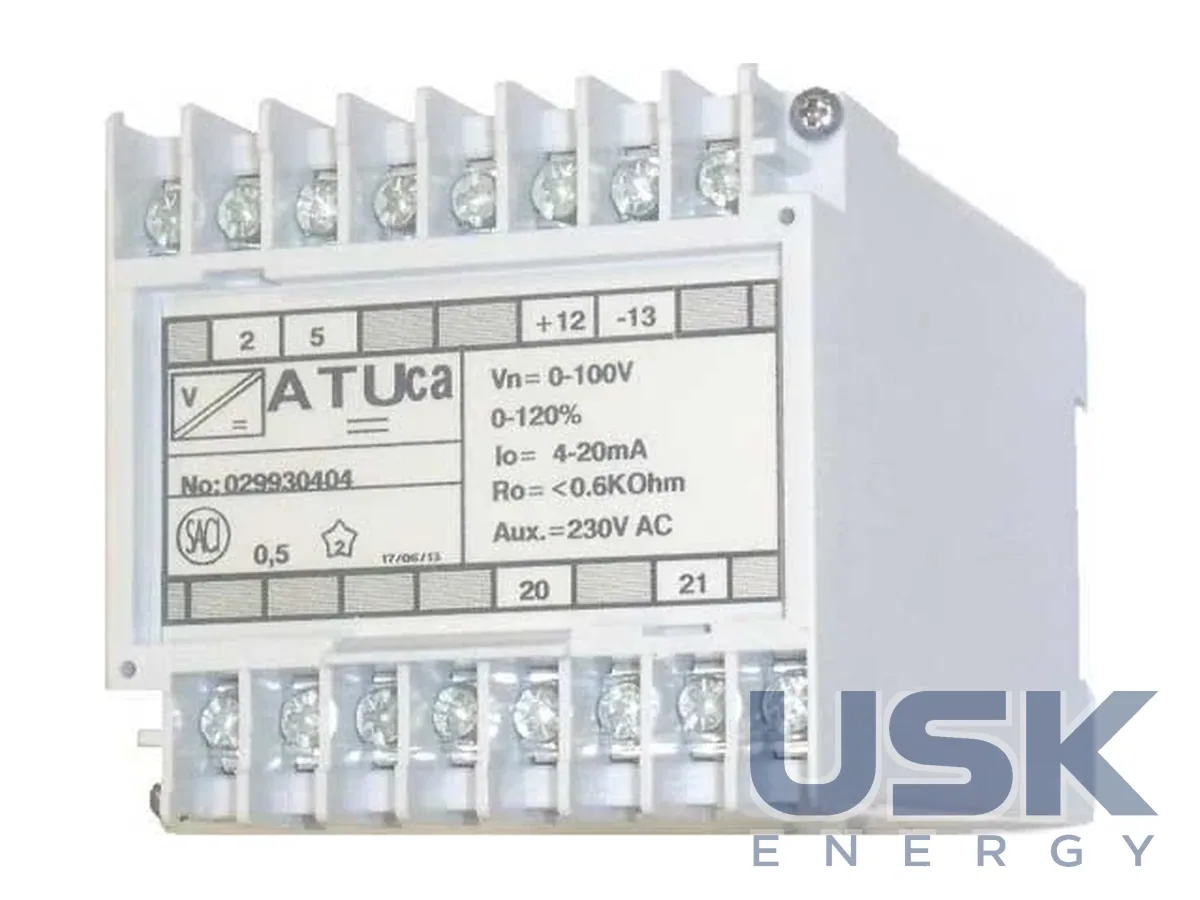
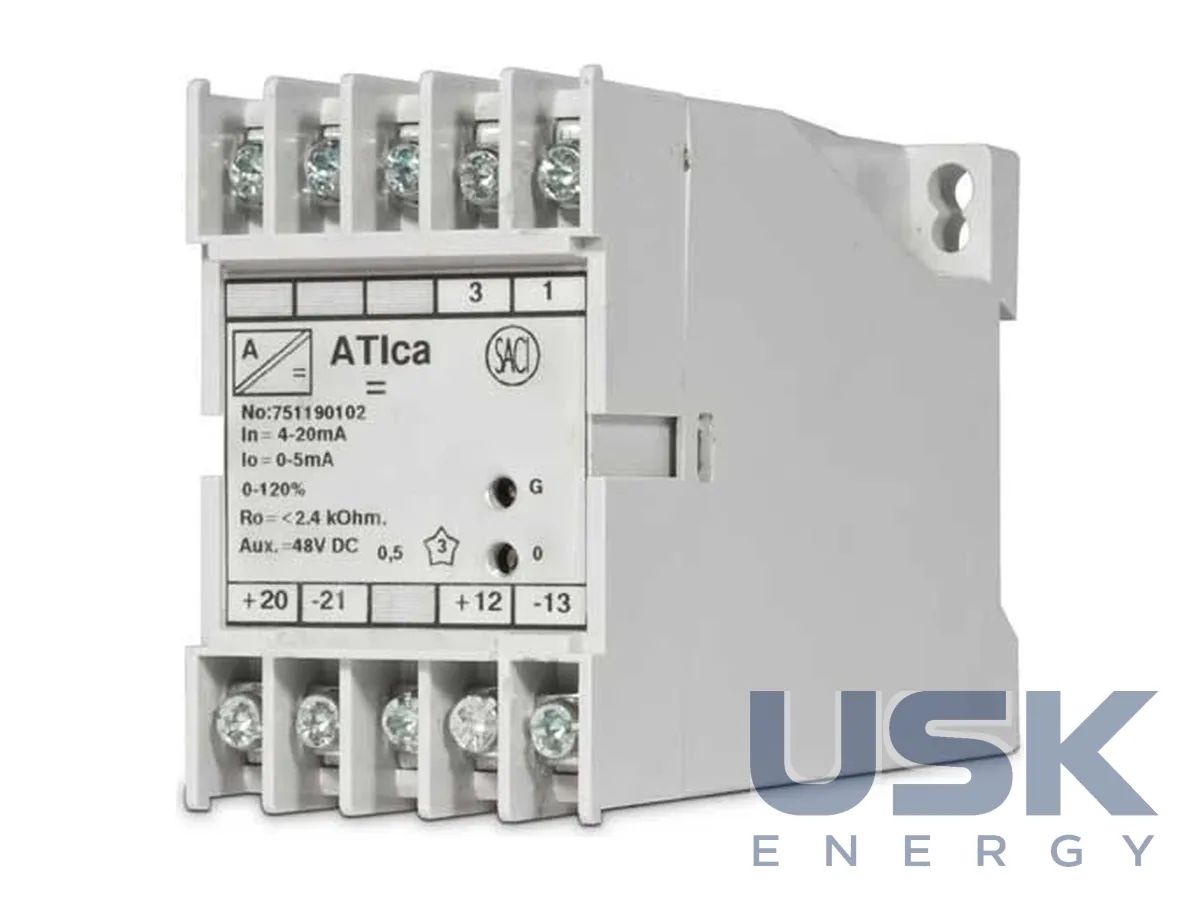
ATI_ / ATU_ / ATA_ / ATF_ / ATW_ / ATS_ single-quantity measuring transducers (current, voltage, power, frequency) to 0–20 / 4–20 mA, 0–10 V
Country: Spain · Model: ATI / ATU / ATA / ATF / ATW / ATS
The ATI, ATU, ATA, ATF, ATW and ATS series convert AC or DC current, voltage, power or frequency into a standard signal of 0–20 mA, 4–20 mA or 0–10 V. The output is galvanically isolated from the measured circuit, so the signal can safely go to a PLC, telemetry unit, SCADA or panel indicator.
- Inputs
- AC current 1 or 5 A; AC voltage 57.7–440 V; DC current 100 µA–5 A; DC voltage 60 mV–440 V; frequency 50/60/400 Hz
- Outputs
- 0–1/5/10/20 mA; 4–20 mA; 0–1/5/10 V, 1–5, 2–10 V
- Auxiliary supply
- 115/230/400 V AC; 12/24/48/110/220 V DC; self-powered (some models)
- Insulation
- 3.7 kV, 50 Hz, 1 min; double insulation, cat. III
Technical specifications
| Inputs | AC current 1 or 5 A; AC voltage 57.7–440 V; DC current 100 µA–5 A; DC voltage 60 mV–440 V; frequency 50/60/400 Hz |
|---|---|
| Outputs | 0–1/5/10/20 mA; 4–20 mA; 0–1/5/10 V, 1–5, 2–10 V |
| Auxiliary supply | 115/230/400 V AC; 12/24/48/110/220 V DC; self-powered (some models) |
| Insulation | 3.7 kV, 50 Hz, 1 min; double insulation, cat. III |
| Impulse strength | 5 kV, 1.2/50 µs |
| Linearity | ≤0.1 % |
| Ripple | ≤0.3 % |
| Response time | ≤200 ms (0–90 % Io) |
| Current overload | 2 In continuously, 20 In 3 s, 40 In 1 s |
| Operating temperature | −10…+55 °C |
| Standards | IEC/EN 60688, IEC 61326, IEC 61010, IEC 60068, IEC 60529 |
Specifications are taken from the manufacturer’s technical documentation. Updated .
Description
ATI measures AC current from a 1 or 5 A transformer, ATU accepts AC voltage of 100, 110, 115, 230, 400 or 440 V, and ATA handles DC current from 100 µA to 5 A, including from a 60 mV shunt, and voltage from 60 mV to 440 V. ATF works at frequencies of 50, 60 and 400 Hz, and ATW, ATWr and ATWV measure active and reactive power. The current outputs of 1, 5, 10 and 20 mA are designed for a load resistance Ro = 12 V / Io, and the saturation limit is 2 Io. The auxiliary supply takes 115, 230 or 400 V AC ±20 % or 12, 24, 48, 110, 220 V DC ±20 %, and some models are powered from the measured circuit and consume 1.5 VA. The insulation is double, 3.7 kV 50 Hz for 1 min, category III, pollution degree 2. They comply with IEC/EN 60688, IEC 60068, IEC/EN 61326, IEC/EN 61010, IEC/EN 60529. They are used in telemetering at substations and power plants, in SCADA systems, marine systems and automation boards.
How to choose
The series is set by the input quantity. Network current through a transformer is covered by ATI, AC voltage by ATU, DC quantities by ATA, frequency by ATF and power by ATW. A 4–20 mA signal requires auxiliary supply, while self-powered models do without a separate line. If voltage, current, power and harmonics are all needed at once, it is better to take the AHM1 analyzer of class 0.5S.
Request a price and lead time
ATI_ / ATU_ / ATA_ / ATF_ / ATW_ / ATS_ single-quantity measuring transducers (current, voltage, power, frequency) to 0–20 / 4–20 mA, 0–10 V. We reply within one business day.
Or email office@usk.ua or call +38 (044) 339-50-20.
FAQ
What load resistance is allowed for the transducer current output?
For the 1, 5, 10 and 20 mA outputs the load resistance is calculated as Ro = 12 V / Io, and the saturation limit is 2 Io.
What overload can the transducers withstand?
For current, 2 In continuously, 20 In for 3 s and 40 In for 1 s; versions for 30 In 3 s and 60 In 1 s are made to order. For voltage, 1.2 Vn continuously and 2 Vn for 10 s.
What are the accuracy and speed of the transducer?
Linearity is no worse than 0.1 %, ripple up to 0.3 %, temperature coefficient 0.01 %/°C, and response time up to 200 ms.
What insulation and noise immunity do the transducers have?
Insulation 3.7 kV 50 Hz for 1 min, impulse 5 kV 1.2/50 µs, HF interference 2.5 kV 1 MHz, operating temperature −10…+55 °C.
Similar products
REQUEST
Need a price, lead time or replacement?
Send us a request and we will confirm the configuration, lead time and delivery terms. We reply by email.